

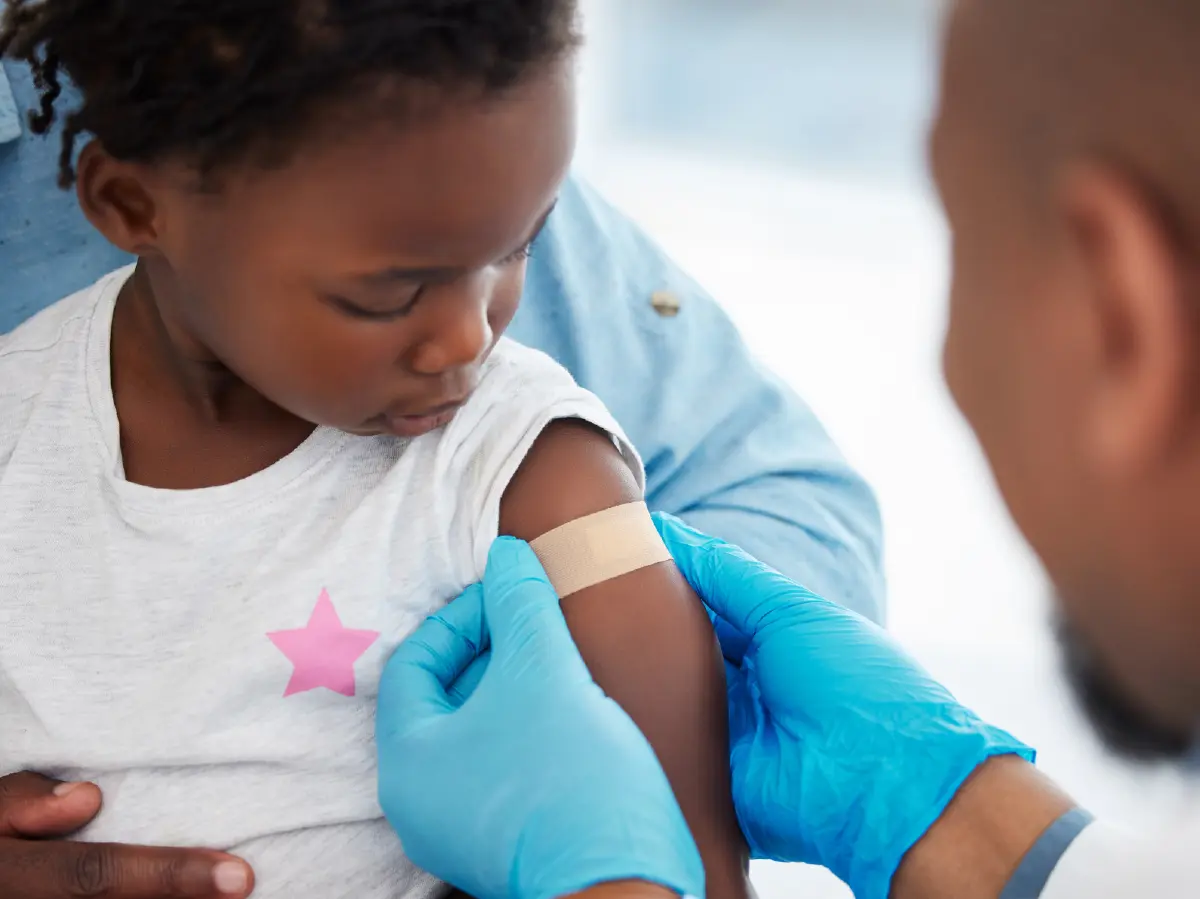
For many families, August is for frenzied back-to-school shopping and re-establishing morning routines to get children to class on time. However, August is also National Immunization Awareness Month — the perfect opportunity for schools, as well as parents and guardians, to review student vaccination records, particularly at “check point” grades.
California law requires all children enrolled in schools, both public and private, to have certain doctor-recommended immunizations, or receive them when they enroll.
The immunizations required to enter kindergarten include polio; diphtheria, tetanus and pertussis (DTaP); measles, mumps and rubella (MMR); hepatitis B; and varicella (chickenpox). To enter seventh grade, students must receive the DTaP booster and varicella.
The California Department of Public Health’s (CDPH) Shots for Schools page, which includes deadlines, answers to frequently asked questions and more, is available on the agency’s website at bit.ly/44bSkiZ. According to the CDPH, the proportion of kindergarten and transitional kindergarten students reported as having received all required immunizations was 93.7 percent in 2023–24 — a decrease from 94.1 percent in 2022–23 but higher than 92.8 percent, as reported in 2020–21. Reported statewide rates for specific immunizations for this age group remained high at 95.4 percent for required doses of DTaP, 95.7 percent for varicella, 96.1 percent for polio, 96.2 percent for MMR and 97.2 percent for hepatitis B. CDPH noted, however, that rates continue to vary widely by county, and that similar to recent years, 0.1 percent of kindergarteners were reported as having a permanent medical exemption to one or more required immunizations.
Among incoming seventh graders, the agency reported that immunization rates for the Ttetanus, diphtheria and pertussis booster (Tdap) decreased slightly in 2021–22 (95.9 percent) from 2019–20 (97.3 percent), while varicella rates remained similar (97.1 percent in 2019–20 and 97.2 percent in 2021–22). An interim seventh grade Tdap rate in 2020–21, during the height of the COVID-19 pandemic which likely affected immunization delivery and school reporting, was 88.6 percent. The Tdap rate for this cohort during eighth grade in 2021–22 was 97.1 percent. The proportion of seventh graders reported with permanent medical exemptions decreased for Tdap from 0.4 percent in 2019–20 to 0.1 percent in 2021–22 and for varicella from 0.9 percent in 2019–20 to 0.4 percent in 2021–22.
If a CDPH staff member finds that a medical exemption is inappropriate or otherwise invalid, it will be reviewed by the state public health officer or their physician/surgeon designee and revoked under prescribed circumstances. Medical exemptions written before Jan. 1, 2020, are not under state review, but new medical exemptions are required when a child enters kindergarten, seventh grade or changes schools.
In 2021, the state created an online portal to send immunization records directly to the CDPH; the portal also allows school administrators access once a child attending the school has been issued a medical exemption in the system.
LEAs should have a process in place to check vaccination records at the designated checkpoints: when children newly enroll in the district, enroll in transitional kindergarten/kindergarten and when students advance to seventh grade. Schools are required to document each student’s vaccination history and the vaccination record of each student enrolled conditionally must be reviewed regularly to ensure they receive their immunizations by the required time.
Students who fail to receive their immunizations by the designated date will be prohibited from attending school. It is important to note that the CDPH directs that, “students who have an individualized education program may continue to receive all necessary services identified in their IEP regardless of their immunization status.”