



California School News masthead
July 2026 Vol. 32, 7
California School News masthead
July 2026 Vol. 32, 7
State Budget
State adopts 2026–27 budget
Budget includes CSBA-opposed $3.9 billion Prop 98 withholding
Gov. Gavin Newsom and the Legislature announced they had reached an agreement on the 2026-27 State Budget on June 26. Described as balanced for the next two fiscal years, spanning 2026–27 and 2027–28, it is Gov. Newsom’s last budget, capping the end of his two terms in office.

In its review of the Governor’s May Budget Revise, the nonpartisan Legislative Analyst’s Office estimated that the state’s year-over-year operational budget deficit will be close to $10 billion annually. This estimate reflects the reality that the state continues to spend more than it is taking in via state general fund revenues. And although the budget is projected to be balanced through the 2026–27 fiscal year, it is unclear whether actions taken by the Legislature and Governor to generate additional revenue — by extending and increasing some specific taxes and capping tax credits large corporations can claim — will resolve the state’s projected operational deficits.


SOS for Student Achievement graphic
legislature
CSBA’s landmark SOS for Student Achievement: Close the State Accountability Gap legislative package took another major step forward on June 24 as all four bills passed out of the Senate Education Committee and advanced to the Senate Appropriations Committee.
resources
resources
Governance corner
Practical tips from our MIG faculty
Summer strategies to increase trustee effectiveness
It’s no secret to trustees across California that school districts and county offices of education are complex systems whether you have 200 students or 20,000 students. This complexity makes governing challenging; there’s a lot that trustees need to understand about district operations in order to govern effectively. CSBA maintains that in order for a board to be effective, individual trustees also need to be effective. There are several elements of individual effectiveness, and summer, with its somewhat slower pace, seems a good time to focus on two.
California School News logo

Staff

Chief Communications Officer:
Troy Flint | tflint@csba.org

Editorial Director:
Kimberly Sellery | ksellery@csba.org

Staff Writers and Contributors:
Alisha Kirby | akirby@csba.org
Heather Kemp | hkemp@csba.org
Chris Reefe | creefe@csba.org
Jeremy Anderson | janderson@csba.org
Greg Francis | gfrancis@csba.org
Barbara Laifman | blaifman@csba.org

Marketing & Communications Director:
Monica Griffis | mgriffis@csba.org

Graphic Design & Branding Director:
Kerry Macklin | kmacklin@csba.org

Graphic Designers:
Thairah Singharath | tsingharath@csba.org
Amanda Moen | amoen@csba.org

Officers
President:
Dr. Debra Schade | Solana Beach SD

President-elect:
Sabrena Rodriguez | Ventura USD

Vice President:
Jackie Thu-Huong Wong | Washington USD

Immediate Past President:
Dr. Bettye Lusk | Monterey Peninsula USD

CEO & Executive Director:
Vernon M. Billy

The California School Boards Association is the essential voice for public education. We inspire our members to be knowledgeable leaders, extraordinary governance practitioners and ardent advocates for all students.
California School News (ISSN 1091-1715) is published 11 times per year by the California School Boards Association, Inc., 3251 Beacon Blvd., West Sacramento, CA 95691. 916-371-4691. $4 of CSBA annual membership dues is for the subscription to California School News. The subscription rate for each CSBA nonmember is $35. Periodicals postage paid at West Sacramento, CA and at additional mailing office. POSTMASTER: Send address changes to California School News, 3251 Beacon Blvd., West Sacramento, CA 95691.

News and feature items submitted for publication are edited for style and space as necessary.

CSBA & NSPRA logos
President’s Message: Dr. Debra Schade
America’s 250th: Are we meeting the moment?
Preparing students for a changing future requires adaptability, creativity, empathy and civic understanding
What if the most important job of today’s schools is preparing students for a future none of us can fully imagine?

As communities across the nation continue celebrating America’s 250th birthday this year, there is much to reflect upon. For 250 years, our democracy has endured, adapted and grown through periods of extraordinary change. Yet, as I think about this milestone, I find myself focused less on the first 250 years and more on the next 250.

LEGISLATURE
CSBA’s legislative package to address the state accountability gap passes Senate Ed Committee
Four-bill governance reform package moves next to Senate Appropriations
CSBA’s landmark SOS for Student Achievement: Close the State Accountability Gap legislative package took another major step forward on June 24 as all four bills passed out of the Senate Education Committee and advanced to the Senate Appropriations Committee. The bills received bipartisan support, and no votes were placed in opposition to the legislation.
Achievement
The Nation’s Report Card details long-term trends in math and reading
Results show no improvement for 13-year-olds
On June 11, the National Center for Education Statistics (NCES) released the 2025 National Assessment of Educational Progress (NAEP) reading and mathematics scores for the country’s 9- and 13-year-olds. These scores come from NAEP’s Long-Term Trend (LTT) Assessment, which began in reading in 1971 and in math in 1973.
Resources
Trends in California student attendance
Fact sheet flags chronic absence levels remain high
Students walk through a busy school hallway next to a staircase.
Using the latest data from the California Department of Education, a fact sheet recently released by Policy Analysis for California Education (PACE) examines trends in chronic absenteeism statewide through the 2024–25 school year.
Legal
New court ruling may affect California’s Voting Rights Act
Has implications for school board elections
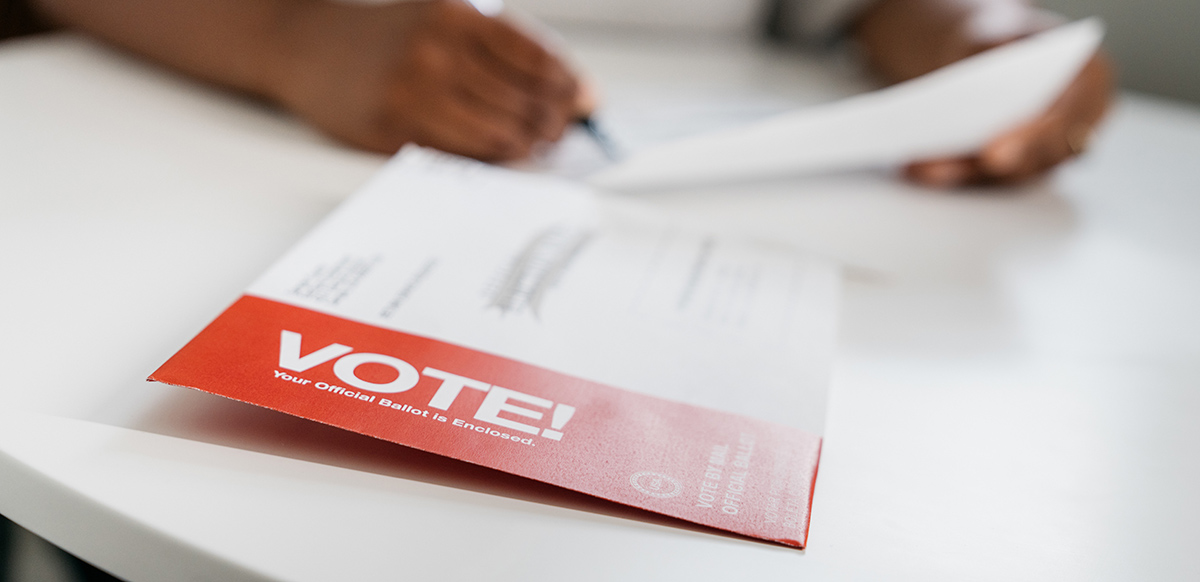
A person fills out a mail-in ballot behind an envelope marked "VOTE!".
In late April, the Supreme Court of the United States (SCOTUS) decided Louisiana v. Callais, a case related to Section 2 of the federal Voting Rights Act of 1965 (VRA), which allows minority voters to challenge state voting practices that make it more challenging for minority groups to participate in the electoral process. The decision makes it more difficult to provide a legal basis for using electoral districts where racial or ethnic minorities make up more than half of the population (majority-minority electoral districts) and has resulted in widespread changes to electoral maps across the country.
Resources
San Diego USD makes nation’s biggest bet on education workforce housing
One successful project is leading to three more
In recent years, several districts have scaled up their education workforce housing (EWH) efforts: Los Angeles Unified School District issued requests for proposals for multiple sites earlier this year; San Francisco and Palo Alto USDs are working on their second projects, and Santa Barbara USD has approved two projects.

Earlier this year, San Diego USD approved plans to add a total of 3,000 units for their employees — nearly triple the total number of EWH units currently open in the state. These units, spread over seven sites, would house around 10 percent of the district’s workforce, making it a true gamechanger for the district’s employees.

County
Building a regional movement to support newcomer students
Merced COE’s Newcomer Network brings much-needed resources to this student population
Across California’s Central Valley, educators are increasingly recognizing an urgent need to effectively support newcomer students while tapping into their rich linguistic and cultural assets. As these students enter new school systems, they often face significant barriers. While statewide efforts have elevated the needs of multilingual learners, newcomers represent a distinct and emerging focus that requires intentional systems, collaboration and innovation.
Resources
New report details challenges in reclassifying English learners
Offers recommendations to streamline the process
Reclassification of students designated as English learners (ELs) is a critical process governed by state policies that mandate using multiple criteria to ensure fairness and accuracy. However, while these policies aim to create equitable pathways for reclassification, discrepancies in local implementation can present barriers for students, according to a report released in March by Policy Analysis for California Education (PACE).
Resources
New literacy resources for governance teams
Include governance recommendations and best practices
CSBA’s Research and Education Policy Development Department published a trio of new literacy-related resources in May to support governance teams’ knowledge of prominent concepts, legislation, conversations on the subject and more.

“A Science of Reading Primer: What governance teams need to know” provides an overview of the science of reading, its connection to California’s English Language Arts/English Language Development (ELA/ELD) Framework, current statewide literacy data and practical questions and resources that school boards can use to guide oversight and policy decisions.

Policy
Nondiscrimination education laws
Assembly bills 715, 932 and 935 collectively reinforce nondiscrimination in schools
Discrimination in school has many negative consequences, from the impact on school climate to individual student academic growth. A 2023 study, “A Study on Educational Discrimination and its Impact on its Future of the Pupil,” published in the International Journal of Research Publication and Reviews states, “Those who face unfair treatment or discrimination are prone to developing negative attitudes toward school, diminished motivation, lower academic achievements, an elevated risk of quitting formal education, exposure to bullying, and mental health challenges.” Districts and county offices of education (COEs) must work to eliminate such discrimination in order to create positive environments for students to learn and flourish.
resources
CSBA provides one-stop shop for small school district leaders
New and improved resources developed with input from Small School District Advisory Workgroup
Small school districts are expected to meet the same benchmarks and documentation requirements as their larger local educational agency counterparts, but they face unique challenges including limited resources and much smaller teams to accomplish this. They also hold a powerful advantage: deep community connection and the ability to make a big impact quickly.
Governance
CCEE sets sights on 2026–27 goals
The organization continues to refine its support goals for LEAs
At the June 18 California Collaborative for Educational Excellence (CCEE) board meeting, the organization’s three centers all shared their accomplishments for 2025–26 and intentions for 2026–27. This included receiving feedback from the board, which largely reinforced ongoing efforts.

The Center for Transformative Systems made progress in areas related to offering responsive and impactful resources and services to those in the field; expanding opportunities to engage; and promoting collaboration within the Statewide System of Support (SSOS) via avenues like the Community Engagement Initiative and Connecting California. The SSOS Toolkit was also released.

UpcomingEvents info: 800-266-3382

Attention: For more information about events, visit www.csba.org/TrainingAndEvents.

California School News back cover masthead
Thanks for reading our July 2026 newsletter!