

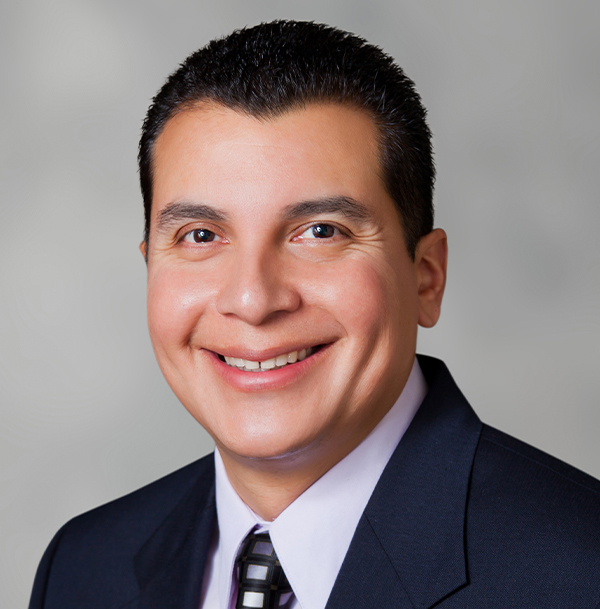
President’s Message: Albert Gonzalez
School board members are expected to master both sides of that equation — what the law allows us to do and what allows us to do the most for our students. We have both a legal obligation to conduct ourselves ethically and a moral responsibility to act honorably as stewards of our communities’ most valuable resources, our public schools. Beyond our sense of duty, there is another reason to become familiar with the ethical boundaries of the school board role — it’s the law.
When Assembly Bill 2158 was signed into law in 2022, it amended the Government Code with a new mandate for school trustees to complete ethics training every two years. Previously, members of school district governing boards, county boards of education and governing bodies for charter schools were exempt from the ethics trainings requirement, which has been mandatory for officials in cities, counties and special districts since 2006.
The new requirement for school trustees takes effect Jan. 1, 2025, and officials must complete the ethics training by Jan. 1, 2026, unless their term in office ends before that time. After the initial training, each governing board member must update their training every two years. As the preeminent provider of school board training and professional development in California, CSBA created an ethics course to help members fulfill this new requirement. The course, Ethics Assembly Bill 2158, includes the use of hypothetical situations for deeper learning experiences, a wealth of resources and a certificate of completion for those who finish the training. The training covers a range of ethical principles related to conflicts of interest, gifts and Form 700 reporting, transparency, fair processes and the prerequisites of holding office. CSBA’s training is provided by licensed California attorneys and, in addition to enhancing your decision-making skills, meets AB 2158’s requirements for board members.
I’m thrilled that CSBA is taking a leading role in providing ethics training for school board members, not because it’s the law, but because this work is central to the success of the governance team. Our ability to be effective advocates for students and representatives of the community is reliant on our ethical conduct. We occupy a position of public trust, and in many communities, the pandemic shook that trust. It’s further threatened by lackluster test scores, partisan divides, student struggles with mental health and the prospect of budget cuts stemming from reduced state funding.
In order to navigate this difficult period, our constituents need to know that we are making tough decisions for the right reasons and that we are not compromised in any way. That doesn’t mean they’ll agree with our choices, but we must act in ways that are beyond reproach. The scrutiny of school boards is greater than ever before and so are the stakes of our work. And while we won’t always be successful, we can always be ethical in our actions, both knowing what we have a right to do and what it is right to do.