

The impact of modern school curriculum is far reaching. Courses and content are designed to do more than ask students to memorize facts — they aim to help students develop critical-thinking and problem-solving skills, notice connections between the past, present and future and link knowledge to actions and outcomes.
The goal is to equip students with both the knowledge and the skills to find their ways to a deeper understanding of the relationship between their learning and their lives.
This can be seen in California’s robust academic standards, which are designed to help students see that English language arts is more than reading and writing; it is relating, thinking and understanding. That science is more than identifying what lies around us; it is predicting, testing and imagining. That mathematics is more than adding and counting; it is finding patterns and recognizing how they shape the world.
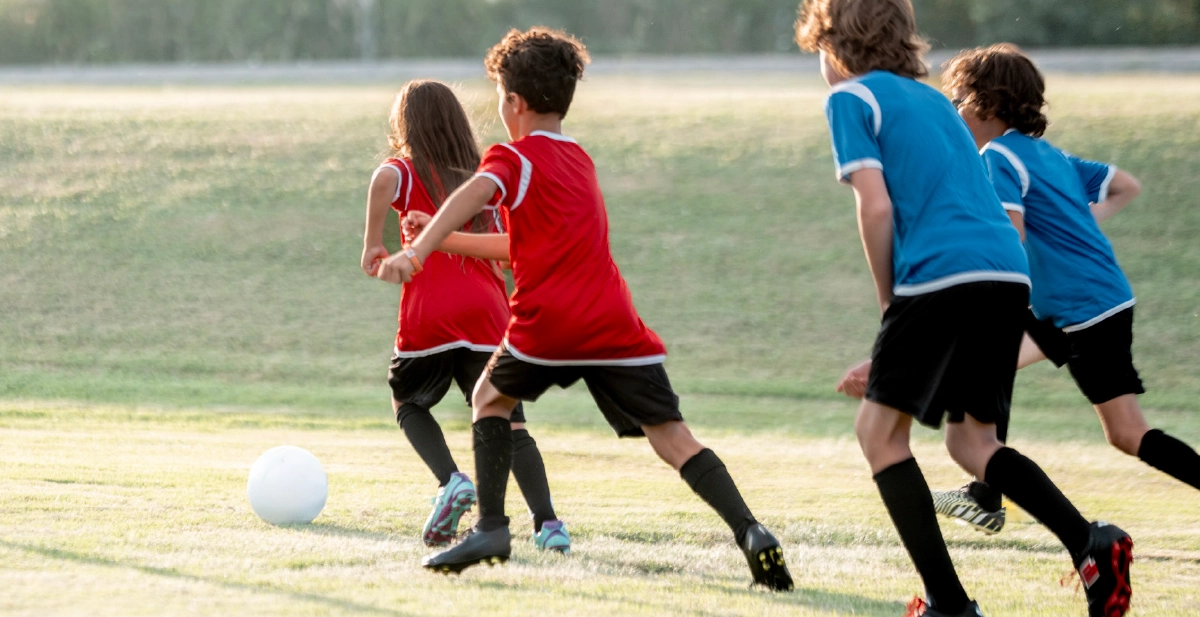
That same goal is reflected in the physical education (PE) curriculum that helps students do more than run and jump; it helps them understand how physical well-being is linked to mental acuity and health, how their bodies work and how long-term wellness is rooted in movement.
CSBA sample Board Policy (BP) 6142.7 – Physical Education and Activity recognizes “…the positive benefits of physical activity on student health, well-being, and academic achievement.”
When the National Institute of Health reviewed 19 studies on the effect of regular physical activity on academic performance in 2023, it concluded that “PA [physical activity] levels of 90 minutes plus per week were associated with improved academic performance, as was PA performed at moderate to vigorous intensity. The optimal duration of PA was 30–60 min per session, whilst various [extra-curricular] sports induced positive academic effects.”
The studies came from every continent except Antarctica and included 6,788 students, 36.8 percent of whom had a diagnosed physical or learning disability. These findings are echoed in publications from the Centers for Disease Control and Prevention, the World Health Organization and the Journal of Political Economy.
Studies such as these shine a light on the fact that physical activity and its role in schools far surpasses giving students “brain breaks” or helping younger children “get the wiggles out.”
Embracing the positive health and academic outcomes associated with physical activity, state law mandates that students in grades 1-6 receive 200 minutes of PE every 10 school days, exclusive of recess and lunch periods, and that students in grades 9-12 participate in a PE course at least 400 minutes of each 10 school days.
A recent update to BPP 6142.7 incorporates that this important time is further safeguarded by Education Code 33355, which requires districts to develop, adopt and implement protocols to preserve PE courses and activities during extreme weather conditions by July 1, 2026. The extreme weather protocols must incorporate the standardized guidelines compiled by the California Department of Education and include specific measures to be taken during extreme weather conditions to ensure that instructional minutes in PE curriculum are preserved during inclement weather.
In addition to providing that local educational agencies set forth appropriate accommodations and remove barriers to entry to PE for all students, including those with physical and/or learning disabilities, individualized education programs and 504 plans, BP 6142.7 has been updated to reflect that districts are required under state law to grant a student in K-12 an accommodation in connection with any physical activity components of a PE course during a period of religious fasting, and that the student is required to be provided with alternative assignments or activities for the period of the accommodation.
While the positive outcomes of physical activity on overall physical, mental and academic well-being are well established, physical education courses are not only about movement. State law requires that PE courses include the effects of physical activity on dynamic health (how activity interacts with students’ evolving physical, mental and social well-being) and the mechanics of body movement (studying the musculoskeletal and nervous systems) as well as activity-specific areas of study. The study of dynamic health and the mechanics of body movement are often paired with units of movement such as aquatics, dance and team sports, but they may also stand alone. PE studies are often supported by links to future careers such as physiotherapy, kinesiology, coaching and neurobiology, as well as by cross-curricular collaboration with career technical education, health sciences and other courses of study.
Recent updates to sample BP/Administrative Regulation 6142.7 – Physical Education and Activity guide districts to provide all students with consistent access to meaningful PE curriculum and highlight the myriad ways in which physical activity and related studies benefit school communities.
Resources that may be helpful when developing and assessing an LEA’s physical education plan include:
- California Department of Education PE resources: www.cde.ca.gov/ci/pe
- Centers for Disease Control: “School Health Index (SHI): A Self-Assessment and Planning Guide”
- Elementary: bit.ly/4aNRTBi;