

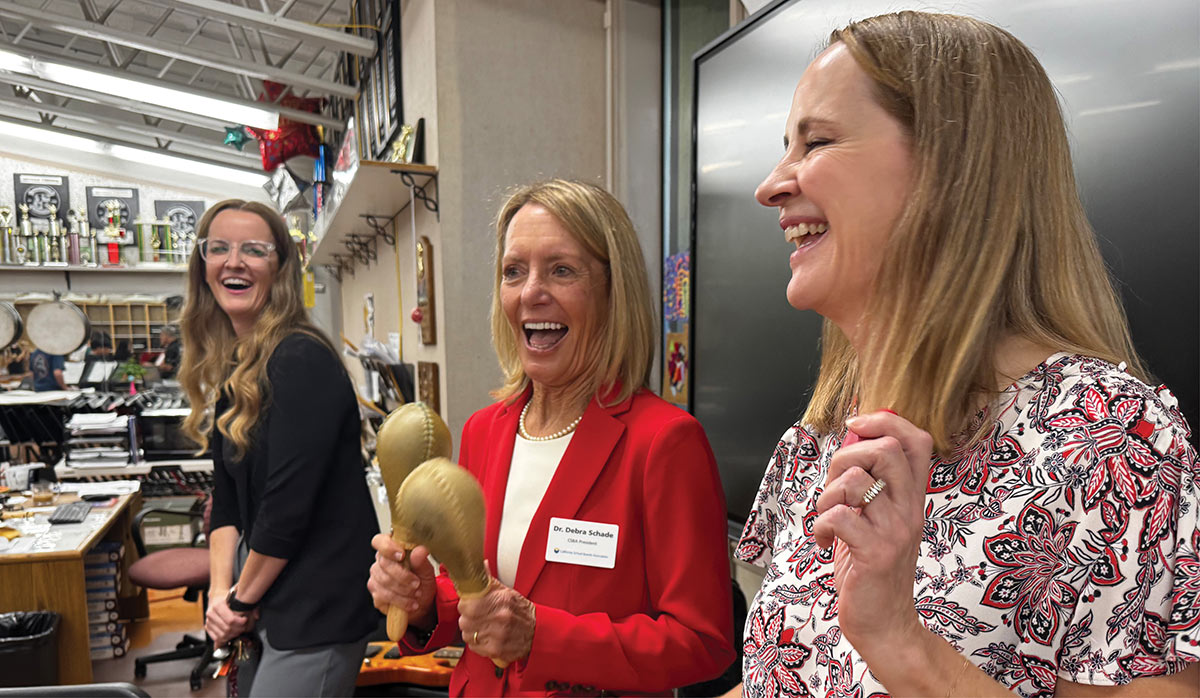
Through regional school boards association meetings, I heard directly from board members about the challenges and successes in their communities. Those conversations reinforced the value of local collaboration and learning from one another across California.
Across the state, I saw schools turning students’ interests into opportunity. In Shasta County and the Antelope Valley in Los Angeles County, students were welding, building robots and exploring careers in advanced manufacturing, biomedical science and agriculture. In Porterville, a micro-transportation program helps students reach career pathways offered at schools across the region. At the Tulare High School Ag Farm, students were developing leadership and agricultural skills through Future Farmers of America. Together, these programs and others like them are helping shape the “toolbelt generation,” young people building practical skills, creativity and problem-solving abilities while discovering possibilities for their futures.
I also saw how schools nurture talents and connect learning to students’ lives. At the Palmdale Academy Charter School, Mariachi and Youth Cinema Film programs give students opportunities to explore music, culture and creative expression. At Parsons Middle School in Redding, students arrived for zero-period rhythmic band and show choir classes, bringing energy to learning before the school day began. At Unidos Middle School in Napa Valley, students described how the Spanish dual language program strengthened connections with extended family while building confidence across languages and cultures.
Other visits showed how districts are addressing the conditions that help students succeed. Student wellness centers reflected a commitment to mental health and supporting students beyond academics. In the Antelope Valley, esports programs engaged students while academic and attendance requirements reinforced responsibility. At Tamarisk Elementary School’s PROMISE Classroom in Palmdale, intentional choices in air quality, lighting, furniture and sound created a calmer environment designed to support learning and well-being.
Public schools also connect students to their communities and the wider world. At Calexico Unified School District, where the U.S.-Mexico border is within walking distance of the high school, every school serves as a community school. Nearby at Imperial High School, a robotics student shared his dream of attending the Massachusetts Institute of Technology and working for NASA. In Napa Valley, students studying viticulture explained how grafting European grape varieties onto American rootstock helps protect vineyards from disease. At Santa Clara County’s Court High School (Osbourne School), I learned how educational support can help incarcerated youth work toward a different future. Students’ circumstances vary, but their need for meaningful educational opportunities do not.

In Fresno County, districts were navigating very different enrollment realities, with some declining and others growing. I learned how 13 districts in the region are working together through a school transportation cooperative to address shared challenges. Governing boards and trustees throughout California told me about the difficult decisions districts are facing around declining enrollment and school closures, and how they are engaging their communities to navigate those challenges.
At Warner USD in San Diego County, I learned about a 12-year effort to secure clean drinking water. A trustee from a rural Tehama County district serving fewer than 200 students described the challenges of funding and delivering special education with limited resources. School boards must make difficult decisions and ensure students have access to the education they deserve, but districts cannot meet those responsibilities without adequate resources and support.
That is why listening must lead to action. CSBA brings the realities of local schools into state and federal decisions and advocates for the conditions students need to succeed. That means protecting the integrity of Proposition 98 funding, reducing unnecessary mandates and documentation, and pressing for a coherent statewide strategy to close achievement gaps. At the federal level, CSBA advocated for reauthorization of the Secure Rural Schools Act, which provides critical support for rural communities, and for a multiyear plan to fully fund the Individuals with Disabilities Education Act.
Our advocacy reflects what I heard across California: local boards are working to meet students’ needs, and state and federal leaders must provide the resources and flexibility that make that work possible. We share a responsibility to ensure that every student has the opportunity to succeed.
This year taught me that listening is essential, but it is only the beginning. Leadership means understanding what students and communities need, confronting the barriers that stand in their way and turning what we learn into action. I am deeply grateful for the opportunity to serve CSBA and to learn from the people who make public education work every day.
Our work is far from finished. Meeting this moment requires courage to challenge the status quo, speak honestly about what students need and refuse to accept that longstanding problems cannot be solved. Sometimes that means making good trouble by asking difficult questions and pushing for something better.
So, I leave you with this challenge: Be bold. Be bold enough to listen to perspectives that challenge your own. Be bold enough to speak up when students need something better. Be bold enough to turn what you learn into action.
It has been an honor to serve as your CSBA President. I look forward to continuing this work with you.
Listen to understand. Lead to make a difference. Be bold enough to act.