
CEO’s note
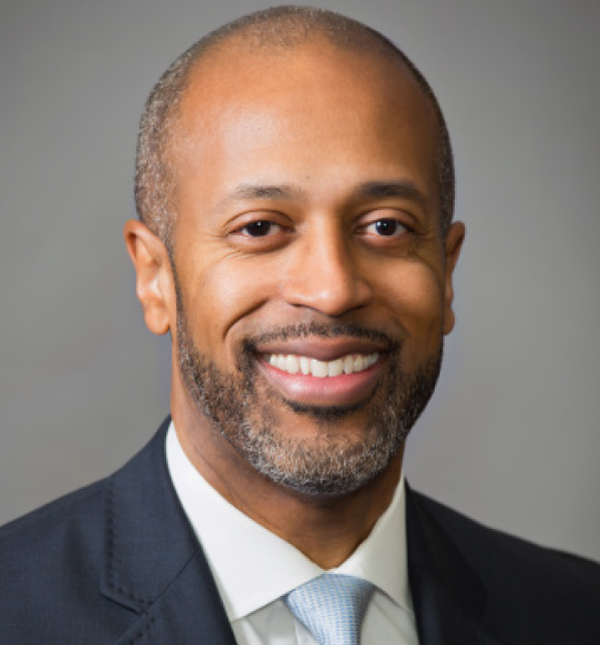
by Vernon M. Billy

It’s time: The state must develop a coherent plan to close the achievement gap
ess than a year from now, on June 2, 2026, California will hold two elections with major implications for the future of public schools. Voters will head to the ballot box to cast votes in the State Primary and General Election for a new governor and state superintendent of public instruction (SSPI), respectively.
The State of California has never prioritized and implemented a single, coherent plan that connects the annual state budget and legislation detailing what the state will do differently to support the efforts of LEAs in closing the achievement gap. This is a different lens through which to approach this critical issue and goes beyond the establishment of the California Collaborative for Educational Excellence (CCEE) and its nascent systems of support and resources, which represent a good first step.

It’s simply not enough anymore to point to a hodgepodge of well-intentioned initiatives and declare victory. The next administration must present an overarching strategy that integrates the annual state budget and existing programs into a cohesive plan that includes benchmarks for holding state legislators and the governor accountable for implementing a coherent plan focused on state activities.
The goal is to create a process of awareness of and reflection on the impact of legislative and executive decisions on our schools — and to encourage more constructive measures to accelerate student achievement. We don’t need more red tape or unfunded mandates for LEAs. We need a cohesive, end-to-end plan for state agencies and legislative bodies that’s easy for parents and the public to understand. Such a plan must explicitly articulate what the state is going to do differently in its policy, budget and operational processes to dramatically improve student results for the lowest-performing pupils. Full stop.
Accountability is paramount as we work to close the achievement gap, but it must be universal, not selective. Optimally, accountability will be shared by the state and LEAs, not a product of the state imposing additional restrictions and unfunded mandates on LEAs without any measurable accounting of its own efforts to close the achievement gap. School boards already face numerous accountability measures at the state and local level, such as intervention by the Fiscal Crisis and Management and Assistance Team, the threat of state takeovers, recalls and elections that rest heavily on the issue of student achievement. It’s important the state has similar checks and balances on the critical issues of closing the achievement gap and improving outcomes for all students.
The starting point for such a strategy should recognize the following foundational items:
Test result reporting: Every year, the state presents only slight improvements in student test scores as significant progress. While any level of progress is notable, we can no longer look at a one-year bump in test results or a percentage increase over a decade and declare victory.
Publicly recognize the scale of the achievement gap: You can’t overcome a societal problem if it’s not properly understood and if there’s not an appropriate sense of urgency to find a solution. Every year, the governor and Legislature expend energy in the media highlighting the issues they think are important, will play well with voters or advance a pet project supported by a favored constituency. This is politics as usual, and it’s brought us unacceptable outcomes for California’s lowest-performing students. Our political leaders should dedicate the same level of political capital and energy to changing how the state operates and holds itself accountable.
It’s time for the state to assume a higher degree of accountability for its own role in closing the achievement gap. The next governor could, for example, incorporate into their annual “State of the State” address specifically what the state has done to close the achievement gap, what has worked and what has not, and what the next steps are in the ongoing effort to provide all students with a high-quality education. This one act alone will clearly demonstrate to all Californians — and the world — the level of importance that the state places on addressing this critically important education issue.
Respect and protect Prop 98: The next governor must respect the will of the voters and the letter of the state’s constitutional law regarding Prop 98, and the new SSPI must be a forceful advocate for full funding of Prop 98, with no exceptions.
Recognize and support the needs of small and rural LEAs: The next governor and SSPI need to fully understand that small and rural LEAs face very specific challenges and require special dispensation when contemplating overly broad legislation and regulations.
No more unfunded mandates: Eliminate unfunded mandates that take money from academic endeavors to finance pet projects that are not mission-critical to boosting overall student performance and closing the achievement gap. Unfunded mandates are typically ongoing, consume valuable resources that could be directed toward higher leverage programs, and inhibit the ability of local administrators and boards with knowledge of local circumstances to meet specific student needs in their communities.
There is no shortage of issues for the next governor and SSPI to address in public schools, and time is of the essence as local school districts and county offices of education work against the clock to close achievement gaps and improve overall student performance. The state can share in this urgency by being more intentional and developing a coherent plan focused on what state agencies, the Legislature and the executive branch will do differently to support the efforts of local school districts and county offices of education.