



CSBA Education Legal Alliance 2025 Annual Report typography

Dear ELA Champion,

Recent developments in California and across the nation have underscored the need for a strong champion for public education — a defender of the interests of our students, as well as the school districts, county offices of education (COEs) and other local educational agencies (LEAs) entrusted with their success. CSBA’s Education Legal Alliance (ELA) has long filled that role.

Over the past year, the ELA has once again distinguished itself by engaging in critical legal battles that safeguard the authority of its members and protect public education. This report highlights the ELA’s many activities during the past 12 months, including several key victories:

  • Preserving local authority in charter school authorizations. In California School Boards Association’s ELA v. California State Board of Education (SBE), the ELA obtained a victory in the Third District Court of Appeal in litigation it originally brought in January 2023. The court upheld the Superior Court’s decision that found the SBE utilized the incorrect standard of review when reviewing a charter school appeal. In addition, the ELA submitted a petition requesting publication of the Court of Appeal’s opinion affirming that the SBE overstepped its authority when it overturned local authorizers. Without the ELA’s intervention, this decision would have remained unpublished and unusable as precedent.
  • Clarifying charter school obligations. In Orange County School of Arts (OCSA) v. Santa Ana USD (SAUSD), the ELA filed an amicus brief supporting SAUSD’s right to recover legally required equitable-share payments for districtwide special education services. This case was crucial in affirming that charter school law governs charter authorization — not inconsistent contractual arrangements. Though the parties have settled the case, it is fair to say that the ELA’s brief was a contributing factor in encouraging the settlement.
  • Protecting LEA resources. In Los Angeles USD v. A.O., the ELA argued for reasonable attorney’s fees in special education cases under the Individuals with Disabilities Education Act (IDEA). The court rejected the plaintiff’s request for nearly $900,000 in fees (at hourly rates up to $975), instead setting the more appropriate $700 hourly rate for experienced attorneys — a critical precedent in safeguarding limited public funds.

In the coming year, the ELA will continue to champion the interests of public education and the students we serve. Your support is essential to that mission, and I encourage you to remain engaged in our work.

If you have any questions about the ELA or its benefits, please contact ELA staff at (800) 266-3382 or legal@csba.org.

Sincerely,

Vernon M. Billy hand written signature

Vernon M. Billy
CEO & Executive Director,
California School Boards Association

Members with whom
the ELA worked directly in 2025*

Members with whom the ELA worked directly in 2025* map

* The ELA is involved in three additional cases filed for the benefit of all California school districts and county offices of education, which are not featured on this map.

What is the
Education Legal Alliance?

CSBA’s Education Legal Alliance (ELA) is a consortium of school districts, county offices of education and regional occupational centers/programs that voluntarily joined together in 1992 to create a powerful force to pursue and defend a broad spectrum of statewide public education interests before state and federal courts, state agencies and the Legislature. The ELA initiates and supports legal activities in issues of statewide significance to all California schools. Working with school attorneys, the efforts of the ELA have proven highly effective in protecting the interests of schools and the students they serve. Potential matters are reviewed and approved by a broad-based steering committee of board members, superintendents and education leaders. Additionally, a legal advisory committee of noted school law attorneys help provide legal analysis and recommendations to the steering committee.

The ELA is funded exclusively by contributions from its members, who are also members of CSBA.

What are the benefits of membership in the Education Legal Alliance?

  • The ELA files amicus briefs and letters in court to support its members on legal issues of statewide importance.
  • It initiates litigation on various issues of statewide importance and often looks to its members to serve as co-plaintiffs in those cases.
  • The ELA weighs in on legislation that impacts its members on issues of statewide importance.

Steering
Committee
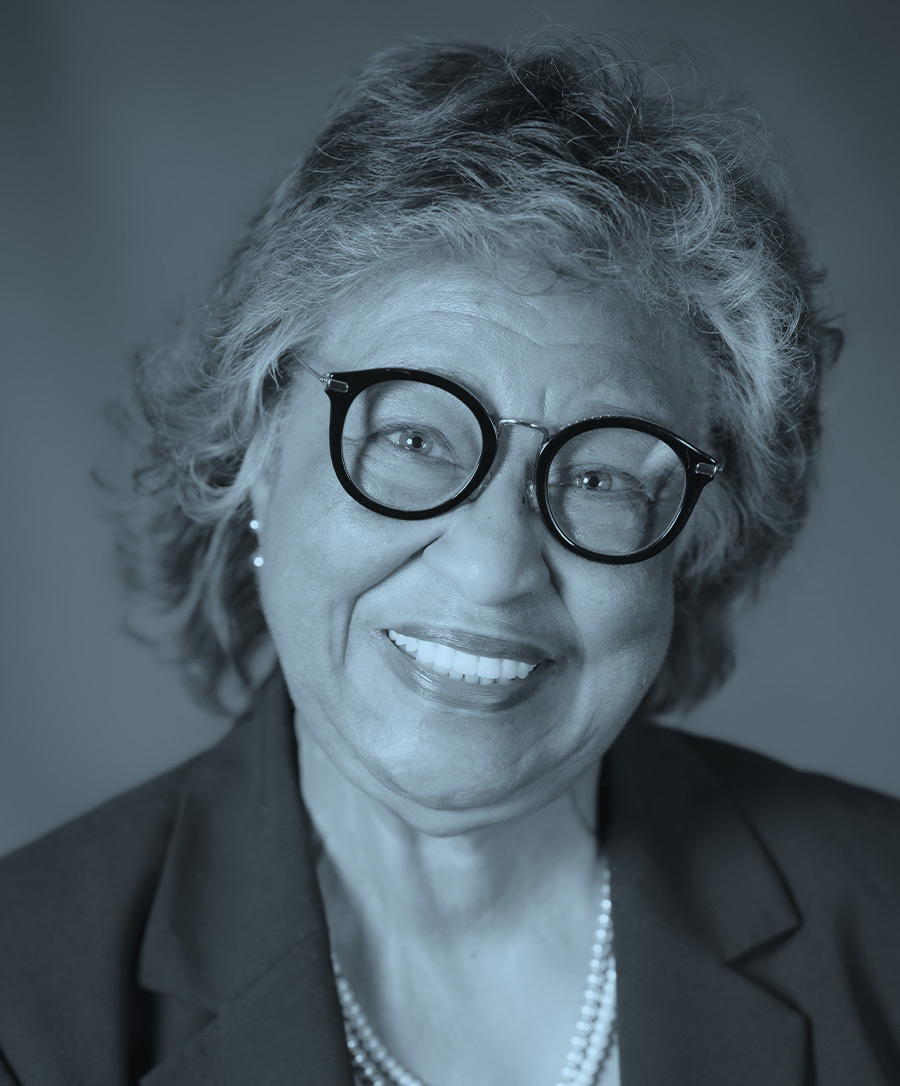
headshot of Bettye Lusk
Dr. Bettye Lusk, Chair
CSBA President
Monterey Peninsula USD
headshot of Debra Schade
Dr. Debra Schade
CSBA President-elect
Solana Beach ESD
headshot of Vernon M. Billy
Vernon M. Billy
CSBA CEO & Executive Director
headshot of Renee Nash
Renee Nash
CSBA Director, Region 4
Eureka Union SD
headshot of Tyler Nelson
Tyler Nelson
CSBA Director, Region 1
Ukiah USD
headshot of Lan Nguyen
Lan Nguyen
Delegate, Region 15
Garden Grove USD
headshot of Jorge Pacheco Jr.
Jorge Pacheco Jr.
Delegate, Region 20
Santa Clara COE
headshot of Gayle Garbolino-Mojica
Gayle Garbolino-Mojica
Superintendent
Placer COE
headshot of Moises Aguirre
Moises Aguirre
Superintendent
Sweetwater Union HSD
headshot of Dr. Gabriela Mafi
Dr. Gabriela Mafi
Superintendent
Garden Grove USD
headshot of Derk Garcia
Derk Garcia
Superintendent
Roseville City SD
headshot of Dr. Steve Ladd
Dr. Steve Ladd
Consultant
Education Expert
headshot of Patti Herrera
Patti Herrera
Consultant
Political Expert
Advisory
Committee
headshot of Vibiana Andrade
Vibiana Andrade
Los Angeles COE
headshot of Spencer Covert
Spencer Covert
Parker & Covert LLP
headshot of Sue Ann Salmon Evans
Sue Ann Salmon Evans
Dannis Woliver Kelley
headshot of Peter K. Fagen
Peter K. Fagen
Fagen Friedman & Fulfrost LLP
headshot of Paul Loya
Paul Loya
Atkinson, Andelson, Loya, Ruud & Romo
headshot of Jeffrey Riel
Jeffrey Riel
Long Beach Unified School District
headshot of Sloan Simmons
Sloan Simmons
Lozano Smith
CSBA
Staff
headshot of Kristin Lindgren-Bruzzone
Kristin Lindgren-Bruzzone
General Counsel
headshot of Rachel Disario
Rachel Disario
Deputy General Counsel
headshot of Bode Owoyele
Bode Owoyele
Associate General Counsel
headshot of Dana Scott
Dana Scott
Associate General Counsel
headshot of Anita Ceballos
Anita Ceballos
Paralegal
Current Activities
SPECIAL EDUCATION — STATUTE OF LIMITATIONS
J.R., by and through his mother, Maria Perez v. Ventura Unified School District United States Court of Appeals for the Ninth Circuit (Case No. 25-334)

MEMBER(S) INVOLVED: Ventura Unified School District

IMPORTANCE OF STATEWIDE ISSUE:

In special education matters, both the Individuals with Disabilities Education Act (IDEA) and the California Education Code provide a two-year statute of limitations for parents to bring claims against local educational agencies alleging their child was denied a free appropriate public education (FAPE) or other violations. The statute of limitations begins when the parent knew or should have known of the alleged actions by the LEA that form the basis of the complaint. Courts have interpreted this “discovery rule” as meaning that a parent has two years from the date they knew or should have known their child’s education was inadequate to bring a claim against an LEA. The two-year statute of limitations can be paused (or “tolled”), however, if the LEA either misrepresents that it had resolved the problem forming the basis of the claim or withholds information that it was required to provide to the parent. This is a relatively high standard to meet and has, in the past, required an intention by the LEA to mislead the parent.
SOVEREIGN IMMUNITY
Health Freedom Defense Fund, Inc. v. CarvalhoNinth Circuit Court of Appeals (22-55908)

MEMBER(S) INVOLVED: Los Angeles Unified School District

IMPORTANCE OF STATEWIDE ISSUE:

The Eleventh Amendment provides, “[t]he Judicial power of the United States shall not be construed to extend to any suit in law or equity, commenced or prosecuted against one of the United States by Citizens of another State, or by Citizens or Subjects of any Foreign State.” This is referred to as “sovereign immunity.” This immunity bars federal lawsuits for money damages against states or entities that are considered “arms of the state,” unless Congress has specifically authorized such a suit (e.g., the IDEA authorizes suits against school districts in federal court). Numerous school districts have obtained dismissals of lawsuits against them based on this doctrine.
Labor Relations/Strikes
Oakland Unified School District v. PERBCalifornia Court of Appeal, First Appellate District (A171007)

MEMBER(S) INVOLVED: Oakland Unified School District

IMPORTANCE OF STATEWIDE ISSUE:

Oakland Unified School District (OUSD) appealed a recent California Public Employment Relations Board (PERB) decision upholding a pre-impasse “unfair practice strike” by the Oakland Education Association (OEA), OUSD’s certificated union. The plain language of the Educational Employment Relations Act (EERA) only authorizes a union to strike after first completing the EERA’s impasse procedures. However, PERB has recognized, through its precedential decisions, a union’s right to engage in a strike without completing the impasse procedures when that strike was “provoked” by an employer’s own unfair practice. These pre-impasse strikes — called “unfair practice strikes” — are not explicitly authorized by the EERA or any other California law. Instead, they were created by PERB through its own caselaw, relying loosely on authority from the National Labor Relations Board, PERB’s federal analogue.
Special Education — Standard for FAPE
A.O. v. Los Angeles Unified School DistrictU.S. District Court, Central District (Case No. 2:21-cv-00757-ODW-PD)

MEMBER(S) INVOLVED: Los Angeles Unified School District

IMPORTANCE OF STATEWIDE ISSUE:

Under the Individuals with Disabilities Education Act (IDEA), courts may award reasonable attorney’s fees to the parents of a child with disability who have prevailed in a special education matter. Reasonable fees awarded under the IDEA must be based on hourly rates prevailing in the community for the kind and quality of services provided. Unfortunately, in California, the rates requested by attorneys representing parents in special education disputes have risen exponentially, resulting in significant impacts on LEA budgets.
Proposition 98

CSBA v. State of California and Director of Finance StephenshawCalifornia Superior Court, County of Sacramento (Case No. 24WM000146)

IMPORTANCE OF STATEWIDE ISSUE:

The ELA has historically been on the front lines of protecting Proposition 98 and that remains true when addressing the implementing language of Senate Bill 153, the 2024 Education Budget Trailer Bill. The language at issue arose from the over-estimation of Proposition 98 revenues by the Department of Finance (DOF) when state tax filings were delayed due to natural disasters in the state. The tax revenues in 2023 were lower than estimated by DOF and resulted in a Proposition 98 calculation below the original amount allocated to the Proposition 98 Guarantee. While the Legislature did not follow through on Gov. Gavin Newsom’s original plan to address the overestimate (in part, due to CSBA’s advocacy efforts), the Legislature added language to SB 153 that would allow the Legislature and DOF to manipulate the Proposition 98 Guarantee in future years with delayed tax filing deadlines. To do so, SB 153 created new Education Code Section 41206.04. This section purports to be implementing language for Proposition 98, but it exceeds the Legislature’s authority to enact implementing legislation and results in an amendment to Proposition 98 that would require a ballot measure approved by the voters.

AB 218 Lookback Provisions
Doe, R.L. v. Merced City School DistrictCalifornia Court of Appeal, Fifth Appellate District (Case No. F087142)
MEMBER(S) INVOLVED: Merced City School District

IMPORTANCE OF STATEWIDE ISSUE:

Over several years, successive legislation has relaxed or suspended limitations on the filing of childhood sexual abuse claims seeking monetary damages against school districts, county offices of education and other institutions entrusted with the care and supervision of children. One such legislation, Assembly Bill 218 (2019), eventually removed all limitations for any such act occurring on or after Jan. 1, 2024. AB 218 also opened a “lookback window” between January 2020 and December 2022 for the filing of childhood sexual abuse claims for acts that occurred prior to AB 218 becoming law. More importantly, AB 218’s lookback window retroactively permitted alleged victims of such acts to file their claims without having to comply with the claims presentation requirements of the Government Tort Claims Act, thereby reviving claims that would have otherwise been legally barred. Based on this retroactive expansion, many districts throughout the state were sued for childhood sexual abuse claims dating back years and even decades and are now working to challenge and somehow defend against oftentimes very old claims and the broad power that AB 218 has provided to plaintiffs.
Charter School Contractual Issues
Orange County School of the Arts v. Santa Ana USDCalifornia Court of Appeal, Second District (Case No. B332826)
MEMBER(S) INVOLVED: Santa Ana Unified School District

IMPORTANCE OF STATEWIDE ISSUE:

Generally, under the Charter Schools Act of 1992, as amended, a charter school may be established upon the granting of a petition by a local school governing board or county board of education (the charter authorizer), based on criteria specified in law. When granted, a charter school must be operated in accordance with law and the provisions of its charter. Within this procedural scheme, questions have arisen as to whether a charter (1) creates contractual obligations that are enforceable against the charter authorizer (school district or county governing board) or (2) is akin to local legislation in the same vein as a city ordinance that may be binding on the authorizer. In addition, may the terms of a charter petition override a requirement of law?
Charter School Petition Appeals
California School Boards Association’s Education Legal Alliance v. California State Board of EducationCalifornia Court of Appeal, Third Appellate District (C099068/C099069 (Consolidated))
MEMBER(S) INVOLVED: Napa Valley Unified School District

IMPORTANCE OF STATEWIDE ISSUE:

The reform of the appeals process for charter school petitions that have been denied by school district and county office governing boards to the State Board of Education (SBE) was a key part of Assembly Bill 1505 (O’Donnell, D-Long Beach) that was signed into law in 2019. In this case, the SBE failed to comply with several of the AB 1505 reforms when it reversed the denials of the Mayacamas Charter Middle School (MCMS) petition by the Napa Valley Unified School District (NVUSD) and the Napa County Board of Education (NCBOE) in September 2022. As background, the Napa Foundation for Options in Education’s (NFOE) submitted a charter school petition for the MCMS to first the NVUSD and, after denial by NVUSD, to NCBOE. Both the NVUSD and NCBOE denied the Mayacamas Charter Petition, and NFOE appealed to the SBE. Despite the fact that Department of Education staff recommended that the SBE affirm the denial of the petition, the SBE sided with the NFOE, finding by a 6-to-5 vote that both NVUSD and NCBOE abused their discretion when denying the petition. The SBE found that NVUSD “abused its discretion” because it “did not provide a fair and impartial hearing process” and the NCBOE did not satisfy statutory requirements for the denial of the petition and did not provide evidence in the documentary record to support its determination that the proposed charter would substantially undermine existing services, offerings or programs. The SBE’s decision meant that local governing boards that are charged with the authority to approve or deny charter school petitions, and oversee those that are approved, would find it difficult to follow the reforms in AB 1505 unless the SBE’s action that misinterpreted and misapplied those reforms were reversed by the court.
CSBA logo

California School Boards Association
(800) 266-3382 | (916) 371-4691
www.csba.org