

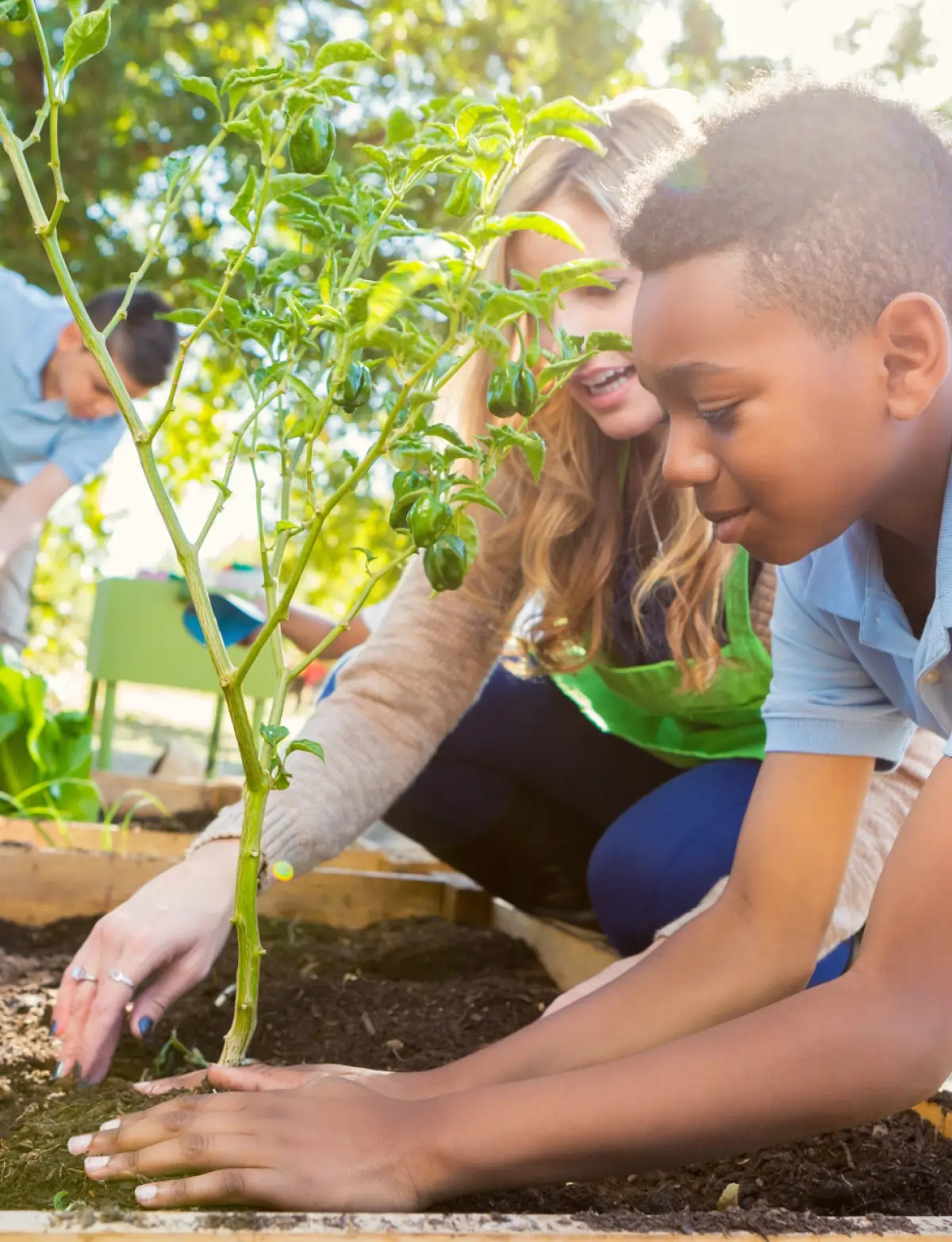
Superintendent Leighangela Brady explained that her district is one of the organizers of the celebration that gives students the opportunity to gain knowledge and collaborate on projects about subjects including responsible consumption and production; good health and well-being; life below water; life on land; climate action; and sustainable cities and communities.
Engaging in conversations about these topics can help raise awareness, inspire others and strengthen sustainability efforts and environmental protections — principles that Earth Day is based on.
National SD is a long-time proponent of this work as evidenced by many impactful initiatives. This year, the district earned recognition as a California Green Ribbon Schools Green Achiever recipient, the highest distinction a local educational agency can receive, for their work around resource conservation, health promotion and environmental literacy.
“National School District (NSD), serving 90 percent low-income, English learner, foster, or homeless students and 95 percent Latinx/Filipino students, exemplifies how high-impact sustainability can thrive in high-need communities,” according to a California Department of Education press release announcing Green Ribbon Schools winners. “Over the past decade, the district has achieved measurable gains — including over 1 million gallons of annual water savings; 1,000-plus tons of waste diverted; a 13 percent reduction in greenhouse gas emissions; and improved energy efficiency — through comprehensive operational upgrades, student-led initiatives, and Sustainable Development Goals-aligned projects … NSD demonstrates that sustainability, academic excellence, and community engagement can flourish in high-need districts and create a lasting culture of environmental stewardship.”
From an operational standpoint, cost reduction can be an added benefit of green endeavors, Brady said.
Brady said that the program has evolved over time to include a living laboratory garden at each campus and a broad course of study that sees students through their educational journey in the district, empowering them to be advocates for sustainability and possibly pursue careers in related fields.
“We believe children’s voices really are what can make an impact on our future,” Brady said. “As we continued on our sustainability journey, we knew we wanted to start with our students and their education.”
Students in transitional kindergarten through third grade learn about planting, harvesting, composting, biodiversity and natural habitats, for example, and are exposed to solar energy as they can plug their devices or microscopes into outlets on solar-powered shade tables.
In grades 4-6, the focus transitions from environmental science to marine science, with lessons on storm water pollution prevention, dry weather runoff, trash pollution in waterways, recycling and more. Sixth graders help plant trees in nearby marshland for first-hand experience with habitat restoration. “Everything you do on a local level really makes an impact on a global level,” Brady said.
The district also convenes a sustainability committee as well as a monthly superintendent-student roundtable looking at local issues and ways to drive change, like a “no idling” campaign that reminds parents not to idle during pick-up as it releases pollutants that children will breathe in.
Brady applauded the board of education, which includes CSBA Delegates Barbara Avalos and Maria Betancourt-Castañeda of Region 17, for its dedication to sustainability and modeling such behavior for students and the community. National SD continues to expand its work, with plans to join the Green Schools National Network, which will provide ongoing professional development and other opportunities.
Earth Day, first observed in 1970, was inspired in part by a historic and devastating oil spill that began in Santa Barbara in early 1969. There was growing societal interest in environmental issues in the decades leading to the event.
Following the incident in California, Wisconsin Sen. Gaylord Nelson and collaborators pursued the idea of having teach-ins on college campuses to raise awareness about the environment. California Rep. Paul Norton “Pete” McCloskey served as Nelson’s co-chair. “By April 22 [1970] interest had grown so much that 20 million Americans at 2,000 colleges and universities and 10,000 grade schools participated in the first Earth Day through demonstrations, decluttering rivers, and more,” according to an article published by National Geographic.
This spurred the modern environmental movement and related legislation.
Many organizations provide LEAs with educational resources and training opportunities.
In 2025, the San Mateo County Office of Education and nonprofit Ten Strands announced the launch of Seeds to Solutions — high-quality and free age-appropriate materials that educators can access to teach K-12 students about environmental literacy.
Through regional partnerships, the California Department of Education’s California Regional Environmental Education Community Network promotes environmental education and literacy by offering teachers access to high-quality professional development and education resources.
EarthDay.org has resources available like air quality lesson plans for middle and high schoolers and an action menu for Earth Day at school to inspire activities like hosting a recycled materials craft event or watching and discussing relevant documentaries.