

The state-funded initiative was led by the Humboldt and San Diego county offices of education in partnership with respected California Native American scholars and many collaborators who weighed in throughout the development process. The free, web-based curriculum includes 150 lessons for grades TK-5, 100 lessons for grades 6-8 and 164 lessons for high school with corresponding teaching strategies and professional development resources.
“For too long, the experiences and contributions of California Tribal Nations has been under or misrepresented in our schools so this curriculum really represents a turning point, a fresh approach to truth-telling that elevates Native voices and gives educators the resources to share more accurate and meaningful stories,” said Humboldt COE Native American Learning Specialist Maggie Peters during a Sept. 15 webinar on implementing the model curriculum. “It ensures that generations of students will grow up with a deeper understanding of the diverse histories and contemporary realities of Native peoples.”
This was the first in a series of webinars on the subject that will cover best practices and professional development. (View event recordings, resources and future dates at bit.ly/42WKag1.)
With the curriculum now available to local educational agencies leaders, Peters said focus is shifting to providing professional development as implementation occurs.
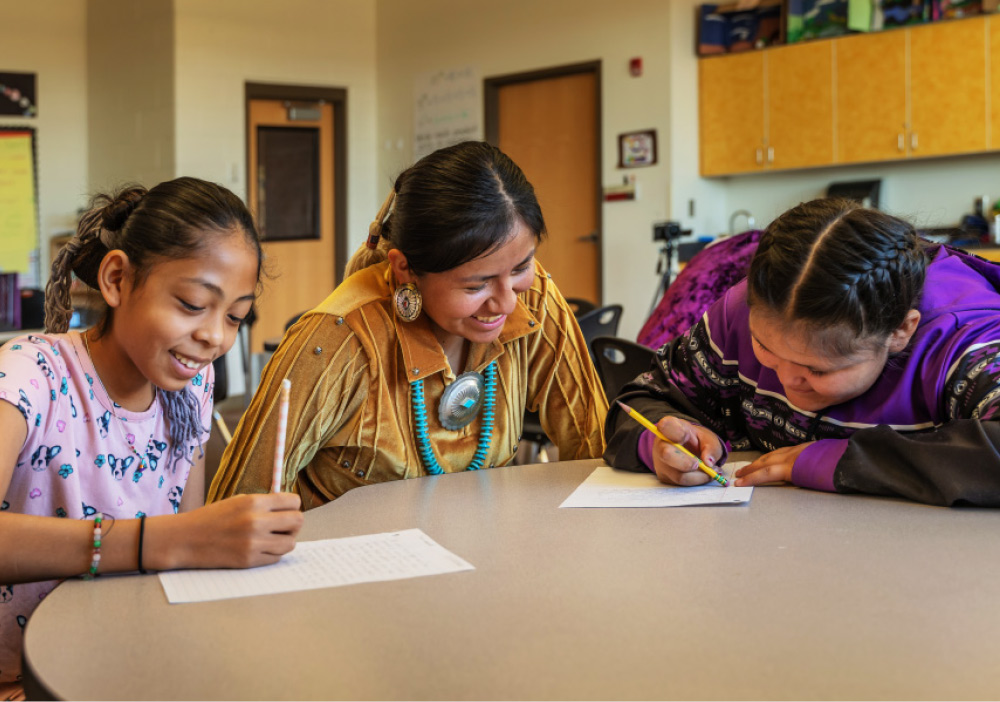
With the understanding that Native education must be led by Native voices, Native educators, including Peters, were hired to guide the project’s development. “We ensured that the NASMC was not written about Native peoples, but curated with them and by them,” Peters said.
The project’s first phase started in August 2022 and included listening, information gathering and engagement activities to understand what the public wanted to see in the curriculum. Phase two encompassed curriculum design and development efforts. “Now we are beginning the publishing and the professional learning component of this work,” Peters noted.
According to Peters, NASMC’s purpose was to meet the urgent need for culturally sustaining curriculum and educational materials to improve teaching and learning about California’s first people and improve classroom climates for related lessons; foster empathy and awareness for the experiences of Native people and expand the understanding of the shared environment; and prepare all pupils to be global citizens who appreciate the contributions of multiple cultures and build future collaborations with tribes.
In practice, the model curriculum can serve as a tool to cultivate belonging, close opportunity gaps and improve student outcomes.
“When we build upon what students know and honor their cultural integrity, they can be successful in multiple spaces, including our classrooms,” Peters said.
Examples of lessons include “Native Homes: Sustainability and the Environment,” “Math and Value, Hoopa Math,” “Indigenous Necklaces: Make Your Own Pendant,” “Native Foods,” “Tribal Governments: Sovereignty, Treaties and Constitutions” and “Trauma and Resilience: An Indigenous Lens.”
“Through this commitment, students of California can now appreciate and celebrate Native knowledge,” Peters said.
Native American Studies Model Curriculum materials can be accessed at camodelcurricula.ucdavis.edu/native-american-studies.