

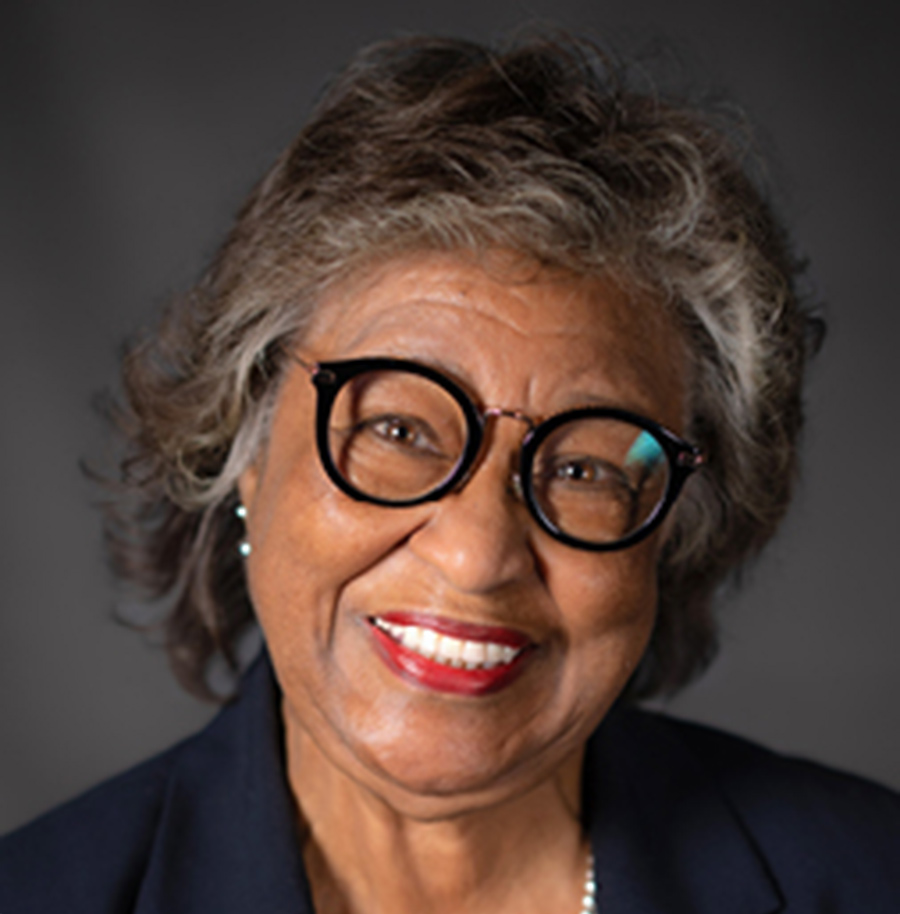
President’s Message: Bettye Lusk

The event offered county board members and superintendents a wonderful opportunity to learn from presenters and from each other, to ask questions of subject matter experts, share experiences with peers, commiserate over the challenges they face and inspire each other to find solutions that improve outcomes for their students. The panels covered diverse topics such as intradistrict transfers, the cost of youth incarceration, preventing human trafficking, charter oversight, apprenticeships and more; but no matter the topic, the passion was evident and so was the commitment.
When I looked around the room at the audience when I spoke with the attendees, I thought, “These are not people who clock out of their jobs and forget about them. These are people who eat, sleep and breathe education.” As someone who believes in the famous quote from Muhammad Ali: “Service to others is the rent you pay for your room here on earth,” I recognize and appreciate those who define their lives through community and service — that spirit is abundant among our county members.
It’s clear that one of the major challenges confronting education leaders is how to prepare students for gainful employment and meaningful lives in a time of transformative change, when robotics, automation and artificial intelligence threaten to upend much of what we think we know about the workforce and society. But even now, despite our best efforts to produce the optimal outcomes for students, there are no guarantees.
The same weekend of the conference, as I was sitting in a car with my nephews near the church I attend, a man approached us. He was disheveled and perhaps not in the best frame of mind. My nephews, following their natural protective instinct, wanted to intervene, but I could see that the man meant no harm and that was a tenderness there. I did not recognize him but he knew me immediately, apologized for his appearance and reminisced about his times in school, saying his mother “always told me I should listen to you and I wished I had.” He continued to apologize for his condition, which I told him wasn’t necessary and ushered him inside the church where my son is a pastor. We were able to connect this young man to resources and social services and we exchanged contact information so we can continue to guide him back onto the right path.
While no one wants to see a former student living on the streets, I felt blessed to have this encounter and I know it happened for a reason. As teachers and educators, we do not just pass through our students’ lives for a year or two; we leave an indelible mark, and hopefully it’s a positive one. And even when they leave campus for the final time, they are still our students. It is personal and it is professional — and that’s why we are educators.