

a conversation with…
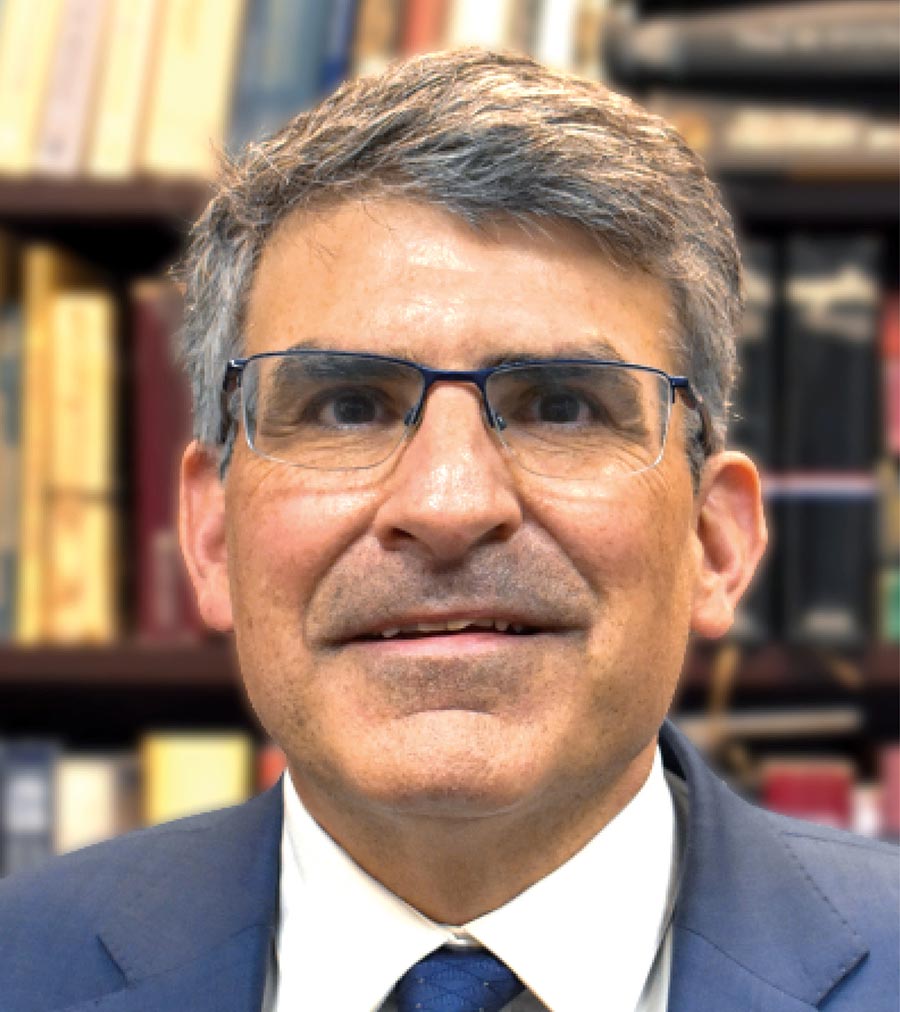
Ahead of the 250th founding of the United States of America this Fourth of July, CSBA spoke with Caresse about the importance of civic education and how to improve its teaching during polarized political times.
a conversation with…
Ahead of the 250th founding of the United States of America this Fourth of July, CSBA spoke with Caresse about the importance of civic education and how to improve its teaching during polarized political times.
I co-authored a 2021 report offering a national-consensus answer to this important question for K-12 schooling, Educating for American Democracy: Excellence in History and Civics for All Learners (EAD). We argued that both civic knowledge and civic virtues are necessary to prepare for committed and effective civic participation by citizens and aspiring citizens of our constitutional democracy.
This must be a high priority for schools, thus state and local educational agency authorities, with appropriate support from the federal government. This model of civics as a renewed priority also requires a recommitment by higher education to preparing teachers with serious civic and history education, so that school communities, and our state and local civic cultures, understand how crucial citizenship education is for sustaining our democratic republic.
American civic culture is in poor health, including regularly violent language and acts of political violence. Americans under 30 have low regard for being a self-governing citizen, for American institutions and principles, for America. Further, for the few voices who care about civics, it has long been a politically contentious arena, effectively reinforcing the shift in schools to prioritize math, reading and science. America must turn this around — schools, along with educational and civic leaders must step up — and we strove for a national-consensus approach in the EAD report so that we could provide constructive support. I recently joined two co-authors on an update about the EAD approach and its implementation bit.ly/4b1fAoD for the National Association of State Boards of Education.
The great French observer of America, Alexis de Tocqueville, coined this phrase to capture our love of country that also included argument and rational assessments of what the United States means, or should mean. My forthcoming book “Teaching America: Reflective Patriotism in Schools, College, and Culture” proposes the need to restore an argumentative gratitude for America to motivate a renewal of civics and the hard work it entails. This includes understanding the deep, fascinating, but very practical principles of separation of powers, federalism and shared norms animating our constitutional order.
In “Teaching America,” I emphasize civic exemplars of reflective patriotism — great leaders who believed in our founding principles and argued we must reform our laws to fully heed them. Frederick Douglass and Abraham Lincoln capture this about slavery; Elizabeth Cady Stanton and Susan B. Anthony about equality for women; Martin Luther King, Jr. about civil rights for all.
As with any political power, we constantly argue whether it is being exercised well or badly, prudently or counter-productively. Race, religion, protests and patriotism aren’t the only controversial issues state authorities have addressed in recent years regarding public school curricula. A challenge for state authorities is to recover a healthy civic and constitutional order through providing civic education that is true to America’s culture of constructive civil disagreement and reflective patriotism. This means curricula and standards that appropriately frame the teaching of contested ideas, in grade-appropriate ways. Censoring particular ideas or topics is likely to blowback on teachers, students, schools, and our local and national civic communities by undermining the positive energy for serious civics, further marginalizing this crucial subject.
If we learn to undertake civil disagreement and civic friendship as Americans and constructively governing amid our disagreements, we will have learned to critically assess our own civic views while hearing out those of fellow citizens. This effort to renew a serious, balanced civic education now should utilize the 250th anniversary to highlight that the nation’s civic founding took place across two decades. Given our civics ignorance and civic crisis, we need to commemorate the entire founding, from declaring independence in 1776 to ratifying the Bill of Rights in 1791. That scale of commemorations shows teachers, school leaders, community leaders and students that the American journey of the founding — from 1776 to completing our constitutional structure in 1791 — is one of argument, achievement, reform and continued debate.
A serious K-12 American civic education must emphasize both while keeping a dynamic balance. We must know and appreciate our common ground and shared history to include our legacy of excluding from full citizenship slaves, women, racial and ethnic minorities, and religious minorities. Yet great civic exemplars teach a lesson of civic hope, addressing these exclusions as un-American. Martin Luther King, Jr., the last of these great leaders, stood in 1963 at the Lincoln Memorial on the National Mall to argue that achieving the American dream means we all must stand in Lincoln’s symbolic shadow.
Civic friendship across divergent principles and backgrounds, given a shared commitment to the American common ground of constitutional principles and norms, buttresses and celebrates the hard work of civil disagreement. Primary sources should lay the foundation for understanding why constructive listening and response, as well as reasonable, articulate statements of one’s own views or questions, are essential capacities in our complex constitutional order. Opportunities to practice civil disagreement in small groups, modeled on debates in 1776 and 1787 in Philadelphia, might be offered. Contemporary controversies might be approached once these civic virtues and capacities are familiar. The EAD implementation effort is developing curricula and assessing pilots across several states that emphasize articulating as well as listening to civic arguments, then evaluating diverse views and re-evaluating one’s own.
A serious civic education also provides students the “durable skills” necessary for successful careers of all kinds, from higher education to vocational training to immediate employment. A renewed priority for civics yields healthier school cultures by emphasizing that all students, faculty and staff are citizens or aspiring citizens of the American experiment in self-government; we’re all in it together, and the liberties and security we enjoy, while not perfect, are the envy of billions across our planet.
Yet today the perpetuation of our forms of self-government is at stake, given our angry polarization and new technologies, but also the flagging civic commitment of so many Americans. It is in the enlightened self-interest of schools and school leaders to reprioritize civic education, to restore the civic mission of public schooling and to renew broader confidence in schools and improve school communities.
Responses have been edited for length.