
CEO’s note
by Vernon M. Billy

n April, CSBA and our partners at the Association of California School Administrators (ACSA) led approximately 250 California school board members and superintendents to Washington, D.C. where we made the case for policies, investments and support to strengthen schools and improve student outcomes in our state. Our efforts in Washington were an extension of the work CSBA staff and our members perform on daily basis, but they were also an affirmation of some of this county’s founding principles: freedom of speech and the right to petition your representatives for laws and policies that reflect your interests.
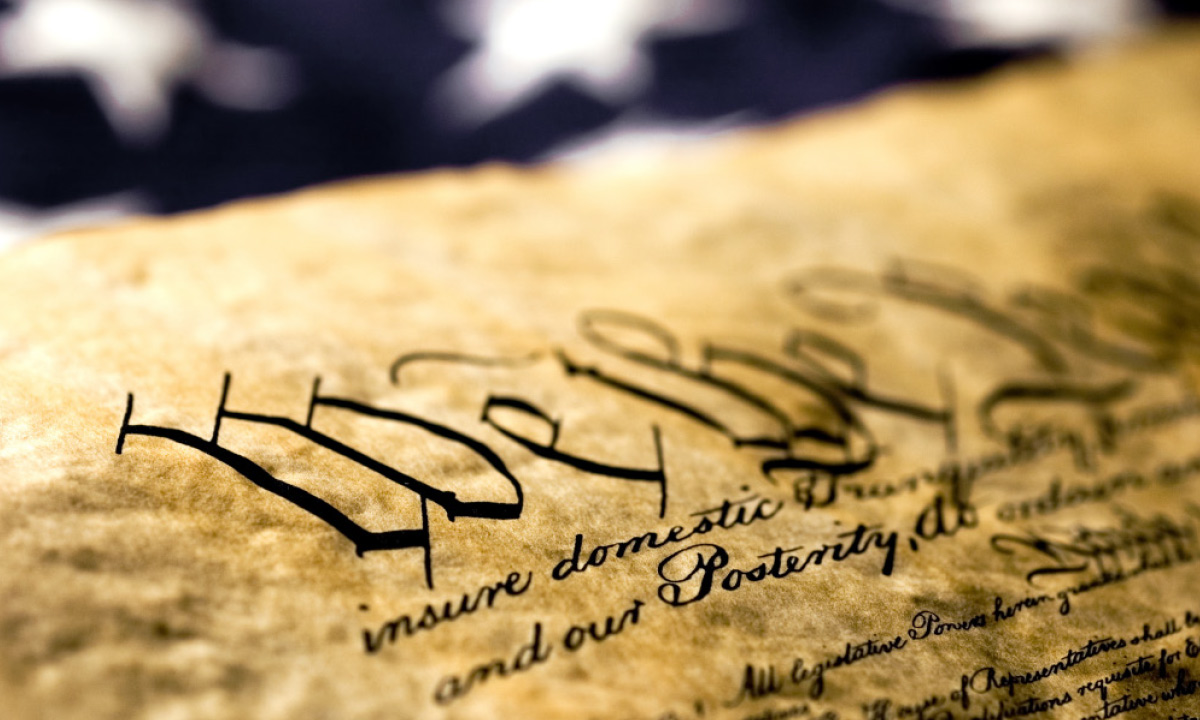
Major anniversaries invite celebration, but they also demand introspection. Two and a half centuries after America’s founding, we must evaluate our triumphs and failures, our progress and setbacks, and determine what is needed to move forward as a people. Public education has a large role to play in this essential process, because the study of history and civics is needed to create the foundational understanding required for productive politics.
Civics education, in particular, is often positioned as an afterthought in the crowded academic schedule. But as the connection between America’s founding principles, our present-day democracy and the long-term strength of our economy and society, civics deserves a place of greater respect. After all, the Constitution does not teach itself. That responsibility has fallen, generation after generation, to the nation’s public schools.
Public education is where young people first encounter the meaning of citizenship. It is where they learn how to engage in civil discourse, evaluate information, navigate disagreement and participate in decisions that affect their communities. It is where they begin to understand that democracy should not be something that merely happens to them, but rather something they are part of and actively working to shape.
As education leaders, we reinforce the connection between our daily work and democracy, and in so doing, we are setting an example for the students who are watching. When we listen to community members speak at board meetings, we are witnessing the First Amendment in action. When students organize around issues they care about, they are practicing civic engagement. When trustees deliberate policy in public, they are modeling democratic decision-making. The principles of the Constitution are alive in our schools, but they must be intentionally reinforced with a thoughtful civics education.

Yet, research consistently shows that access to high-quality civic learning is uneven. Students in under-resourced communities are less likely to receive the kinds of instruction and opportunities, such as debate, service learning or student voice initiatives that build civic capacity. These disparities mirror the broader achievement gaps we continue to confront across our system and that should concern us not only as educators, but as stewards of a democratic society.
A healthy democracy depends on an informed and engaged citizenry. The Bill of Rights enshrined essential freedoms such as speech, religion, press, assembly and petition, not as passive guarantees, but as active tools of self-government. These freedoms were designed to be exercised, challenged, interpreted and, when necessary, defended. That defense requires people who can distinguish credible information from misinformation, who can engage in respectful disagreement and who understand both their rights and their responsibilities. When those capacities are unevenly distributed, so, too, is participation.
To capture the attention of today’s students, civics must evolve to meet modern challenges. It is no longer sufficient to focus solely on memorization of governmental structures. Students must also develop the skills required to function in a complex, information-rich and often polarized society.
That includes media literacy: understanding how information is produced, distributed and consumed. It includes critical thinking and the ability to evaluate sources, evidence and arguments. It includes communication and listening actively, speaking respectfully and engaging constructively. And it includes real-world application: opportunities to participate in civic life, whether through service learning, student leadership or community-based projects. To remain engaging, civics education must move from passive knowledge to active practice.
As we look toward America’s 250th birthday, we should be clear-eyed about the challenges we face. Our democracy is subject to division, misinformation and disengagement. But we should also be clear about the tools at our disposal. Public education is one of the most powerful tools and it can be used to build a brighter future. Public schools are where the next generation learns not only what America is, but what it can be. It is where the principles of the Constitution are translated into practice. And it is where the promise of a more perfect union is renewed.