

class act
Best practices in action
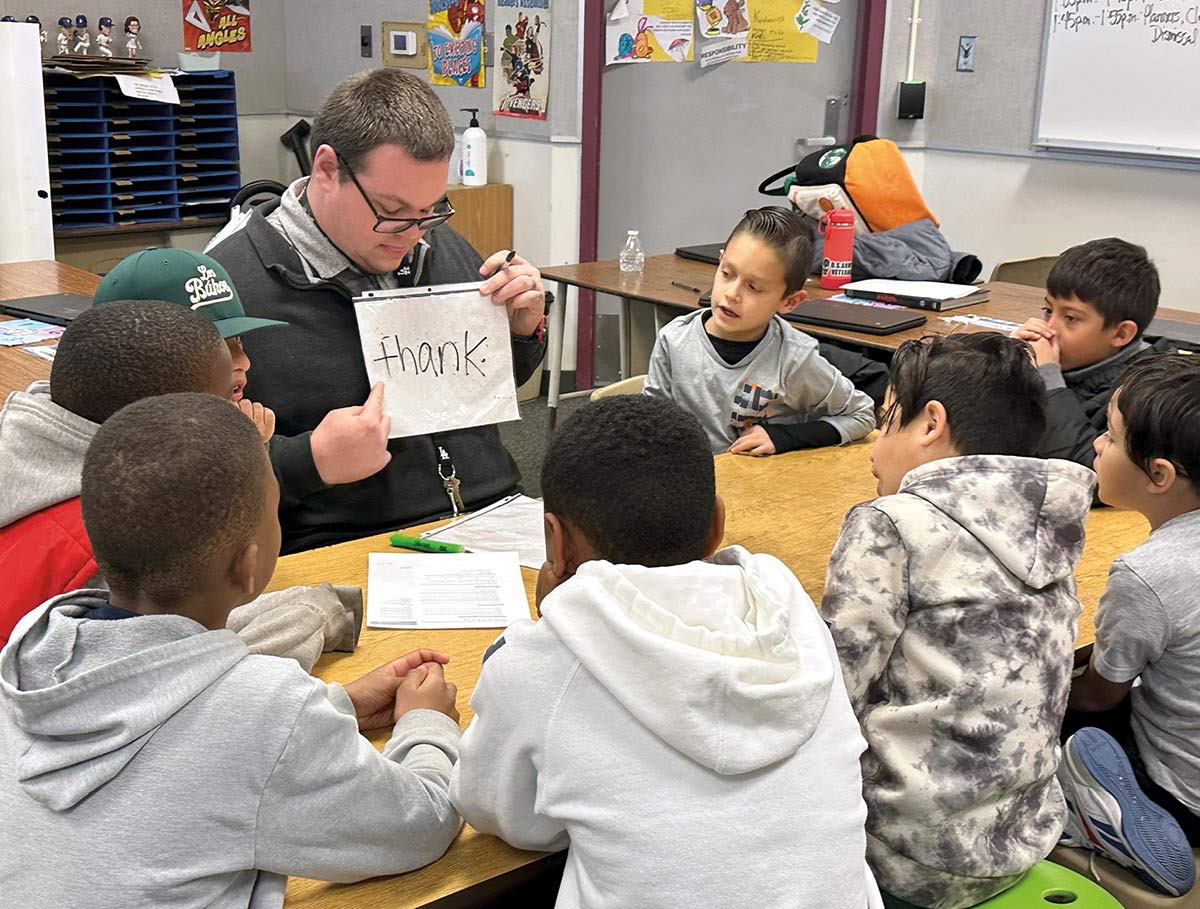
When the program started, almost half of K-3 students were below grade level. Through data-driven, structured literacy and progress monitoring, nearly 100 percent of K-3 students grew in foundational skills and 80 percent of students in grades 4-8 advanced multiple levels.
“One of our board goals is to have everyone reading by third grade and reading on grade level,” explained Christina Fitzgerald, the district’s director of Curriculum and Instruction.
Kellee Koonce, the teacher on special assignment hired to help Westside Union ESD accomplish that goal, noted that the issue largely stems from a lack of foundational knowledge. “Students can’t progress in their reading ability until they master those foundational skills, so that’s what our program focuses on,” she said.
Koonce said the program measures and tracks student progress using the NWEA MAP Reading Fluency assessments, which measure oral reading fluency, comprehension and foundational skills such as phonological awareness — meaning children know the letters, their sounds and how to blend those letters into words.
“We look at that data in many different ways to be able to target that instruction to students’ abilities as closely as possible so that instruction, that intervention that they’re getting, is really accelerating their learning,” Koonce added. “We don’t focus on what grade level they are. We focus on what their reading ability is and where those gaps are so that they can be filled in.”
Many students increase multiple ZPD — or Zone of Proximal Development — levels, she continued. ZPD levels are crucial for effective instruction and reading because they show the gap between what a student can handle alone versus what they can do with guidance from a teacher.
Additionally, feedback from students, teachers and parents show increased confidence levels and the self-esteem of children who’ve participated in the program.
And the benefits don’t end there. Fitzgerald said that while the district needs to take a deeper dive into the data, officials are “definitely seeing a correlation that the students who are gaining their skills in reading also see their math scores going up. And it is understandable considering so much of the assessments are real-world problem solving, and it’s those same critical-thinking skills that are being applied.”
Superintendent Regina Rossall noted that “one of the long-term effects of being able to be a good reader in today’s world is discerning when data is accurate … or making decisions about medications or purchases.”
“We’ve also put an emphasis on our administrators being trained as well,” explained Rossall. “Many of our principals in the primary grades have also gone through the training program so everybody’s on the same page.”
To ensure this role isn’t just another responsibility placed on staff, the district has been utilizing Expanded Learning Opportunities Program funding to pay teachers to provide this structured reading intervention beyond the school day.
“Our union and our board and our cabinet worked collaboratively to provide a different pay scale for these folks that are working after school,” Fitzgerald said. “And they actually do receive their hourly rate, so it’s a highly coveted position because we recognize, and the board recognizes, that you have to have exceptional skills to be able to address the needs of these students. And so, that has really helped have a consistent group of folks year after year that participate in that program. Because we’ve had consistency with the teachers every year, we’ve been able to make enhancements to the curriculum to target more precisely the needs of the students.”
The collaboration between the teachers across grade levels has also increased as a result of the program, benefiting all students and improving the overall school climate and sense of community, according to both Fitzgerald and Koonce.