

a conversation with…

CSBA President Dr. Debra Schade
2026 CSBA President Dr. Debra Schade is a trustee in the Solana Beach School District, where she has served for 23 years. She previously held the role of Vice President of the San Diego County School Boards Association, demonstrating her commitment to local and regional educational leadership. Her professional background is in research, technology and entrepreneurship, which fuels her advocacy for early computer science literacy. She serves on the board of The League of Amazing Programmers, a nonprofit that provides underserved youth with programming instruction, engineering skills and career-focused development.

a conversation with…
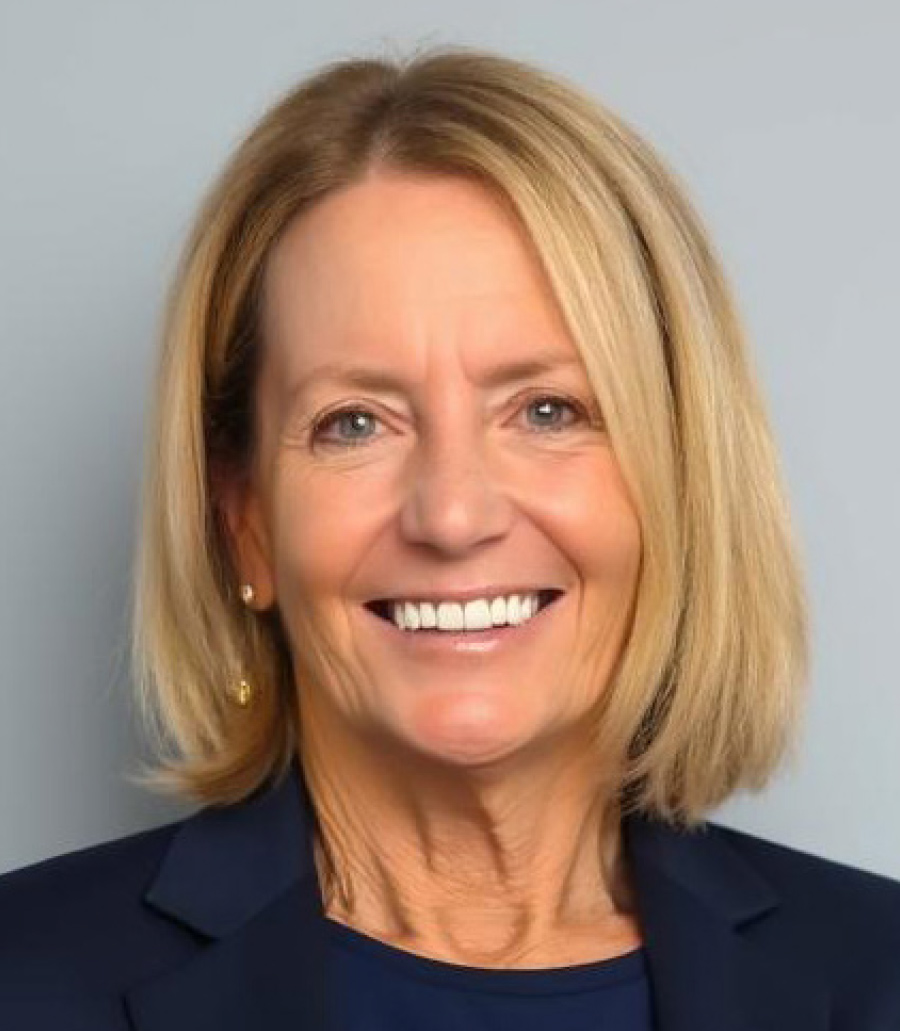
CSBA President Dr. Debra Schade
2026 CSBA President Dr. Debra Schade is a trustee in the Solana Beach School District, where she has served for 23 years. She previously held the role of Vice President of the San Diego County School Boards Association, demonstrating her commitment to local and regional educational leadership. Her professional background is in research, technology and entrepreneurship, which fuels her advocacy for early computer science literacy. She serves on the board of The League of Amazing Programmers, a nonprofit that provides underserved youth with programming instruction, engineering skills and career-focused development.
CSBA President Dr. Debra Schade
digital illustration of young child with various icons above his head like gears, rocket ship, science beaker, light bulb, and motorcycle
Low expectations come at a high cost. When students aren’t challenged, they miss opportunities to grow, to discover what they’re capable of, and to build the confidence that comes from meaningful achievement.

Can you tell us a bit about your background, including how long you’ve been a board member, your own K-12 education and your professional experience?
I was born in the Bay Area to a father who was a naval officer and pilot, and I grew up with a sense of discipline, curiosity and drive from an early age. Growing up, I moved frequently and attended public schools in the United States and abroad, each with its own approach to academics. I experienced firsthand how dramatically standards and expectations can vary from one system to another. For example, in one state, earning top marks required near-perfect scores and a deep level of preparation; the rigor pushed students to think critically and truly master the material. In another, the grading scale was far more forgiving; expectations were noticeably lower, and it was surprisingly easy to do well with minimal effort. Living through those contrasts made something very clear: low expectations come at a high cost. When students aren’t challenged, they miss opportunities to grow, to discover what they’re capable of, and to build the confidence that comes from meaningful achievement. That awareness has stayed with me and continues to fuel my belief in the importance of high-quality education and consistent standards for every student — no matter where they live.

After my K 12 experience. I went to a public university. I got an undergraduate degree, my master’s and my Ph.D. I’ve had a very diverse career. I began my career in academia and research, and later while running a technology company with my husband, I managed human resources and helped build a team of exceptional talent. I’ve also been very committed to public service. I’ve been a board member in my local district, been very active in CSBA, I’ve been on a nonprofit board and also a board member for a public trust. I think all of those experiences really brought me to the importance of public education. My mother’s early life was marked by poverty, and it was education that allowed her to rise above it. She made sure each of her children grew up with that same belief in the power of knowledge. And myself and my siblings have modeled the importance of education in our families as well.

What made you become active in CSBA, and why would you encourage other board members to get more involved with the association?
When I was first elected, I remember going to the new school board member training at the Annual Education Conference and being amazed at how many people were on the same journey that I was on. It made me realize that we were all standing strong for our students. It also instilled in me the importance of having CSBA as a partner along my journey. Choosing to take on a leadership role at CSBA was intentional and one I made with purpose. I was elected as a Delegate to represent Region 17, which is San Diego County, in 2016. San Diego County is one of the largest counties in the state, with 42 school districts that are very diverse. We have tribal lands, we have military, we have rural, we have border, we have coastal — we have it all. When I was elected Director, I became deeply committed to building representation in my region that was truly reflective of the students we serve. Moving into my role on the CSBA Executive Committee, I have felt an urgency to continue to fulfill CSBA’s mission and vision, and fiercely advocate for strengthening public education in California.

Now, as CSBA President, I’m committed to listening to our members. We are a member service organization, elevating the innovation that’s happening in local educational agencies across California and building statewide leadership capacity in our organization is critical. We are here to ensure that our policies reflect the mission and vision of our association and strengthen outcomes for our students. I encourage all school board members to get involved with CSBA. It is a great way to connect with peers, strengthen your skills, advocate for your students and have a real impact on the future of California public schools. Because at the end of the day, strong governance creates strong communities.

You’ve been passionate about advocating for CSBA’s campaign to close the achievement gap. Why is it so important and what is CSBA asking the state to do?
Across the state, LEAs are working tirelessly to accelerate learning through professional development, mentorship, tutoring, family engagement and other targeted strategies. But the data tells us the truth: incremental progress is not enough. When only 36 percent of our students are proficient in math, it means 64 percent (almost seven in 10 students) are being left behind. That is a call to action we cannot ignore.

CSBA is urging the state to adopt a unified, focused strategy to close the achievement gap. We need aligned funding, legislation, accountability and high expectations, all working toward the same goal. The timing is urgent because our students cannot wait.

Closing the achievement gap is not just an education issue. It is a community issue. When students rise, California rises.

As CSBA President, I’m committed to listening to our members. We are a member service organization, elevating the innovation that’s happening in local educational agencies across California and building statewide leadership capacity in our organization is critical.

How do you view CSBA’s advocacy role in the current state and national landscape?
I think there has never been a more important time to be part of CSBA’s advocacy efforts. We have a very strong association, and when all of our members are participating in our advocacy, our collective voice really can move the needle. There are multiple ways that members can be engaged. Our PACER [Public Affairs and Community Engagement Representatives] program has allowed CSBA to build relationships and communication with local representatives. Our Legislative Action Week brings our membership together to really advocate for CSBA’s policies and legislative platform for the session. The Coast2Coast Federal Advocacy Trip in partnership with ACSA [Association of California School Administrators] brings CSBA to Washington and allows us to have that voice at the national level to protect, improve and resource our California schools. And CSBA’s action alerts are a real-time way that members can be active in advocacy — those actions really make a difference when voting happens and legislation is moving.
What are some of your most rewarding experiences as a board member?
There are countless moments that remind me why this work matters so deeply. It is “soul-filling,” to borrow my own favorite phrase. One of the greatest joys each year is celebrating English learner reclassification ceremonies, witnessing students reach a milestone that reflects not just learning, but perseverance and identity. I’m so proud of my school district for prioritizing student mental health long before the pandemic challenges, laying the foundation for a strong, districtwide system of support for every student. We know that students can’t fully learn if their minds aren’t engaged, and this work ensures that every child feels heard, valued and empowered to share their voice.

Passing a community-funded bond that rebuilt and modernized aging facilities is another source of pride. Creating safe, inspiring campuses, improving food services, and expanding technology access laid the foundation for powerful learning environments. As a parent volunteer, I started a Young Scientist Club at my children’s school that invited professionals from the community to engage with our students, like a naval architect who talked to the students about building submarines. This experience made me question why we were losing many of our young girls, our students of color and our neurodiverse students from pursuing STEM fields. So, 14 years ago, our district built a robust STEM program and brought discovery, teamwork, critical thinking and “failure is learning” into the conversation. We received a 2016 Golden Bell Award for that program, and it continues to be highly sought after and is funded through community partnerships and parents’ donations. It’s really become one of our premier educational opportunities for our students.

You’ve been a strong advocate around early computer science literacy, particularly when it comes to underserved youth. What makes that a high priority for students?
Technology is shaping every industry and opportunity our students will encounter. When the workforce designing and coding the tools we use every day does not reflect the diversity of our state, innovation suffers and inequity grows. That concern fueled my early advocacy to expand access to high-quality computer science education in underserved communities, paired with mentorship to open pathways into tech careers. Technology careers have been historically good paying jobs, so there is an economic development thread for these communities as well.

California has made progress, with growing access to computer science courses statewide. But with artificial intelligence (AI) advancement accelerating, this work must continue and adapt to the new landscape. AI is transforming the world around us in ways that feel both exciting and daunting. Our responsibility as leaders is to approach it thoughtfully, recognize both its opportunities and its limits, and ensure that our students and colleagues are equipped to use it responsibly, creatively and confidently. Students need to be creators and problem-solvers, not simply consumers of technology. As I often say, our students deserve the chance to build the future, not just use it.

As a former college athlete and someone who prioritizes physical activity, are there any changes you’d like to see at the state or federal level that could help LEAs better support students’ physical well-being?
As a lifelong runner who competed in Division I track and cross-country, I can trace my confidence back to one early milestone: the President’s Physical Fitness Award. It taught me that effort builds ability. That lesson has stayed with me, and even now I make movement part of my life through running, hiking, swimming and tennis. Today, children navigate a very different landscape. Personal technology has created constant distraction and sedentary habits. Without guidance on healthy use, and age restrictions on access, we continue to risk undermining their physical and mental well-being.

Schools are now taking a more whole-child approach, prioritizing movement, nutrition, school gardens, wellness and mental health. But these programs require sustainable funding. As federal support recedes, schools face growing gaps. We must champion physical well-being as fundamental to academic success. As research shows, students who walk or bike to school are ready to learn and more focused at the beginning of the school day. Active bodies fuel active brains.

Treating the whole child and educating the whole child is a heavy lift for schools but we’re willing to take that on. But I do think we are going to have to need a coordinated effort for long and sustaining resources to be able to do that.

As a veteran board member, what advice would you give to new or aspiring board members to starting out?
First of all, stay engaged with CSBA and never stop learning. Training, webinars, peer support and advocacy opportunities will strengthen your governance practice and deepen your impact. Build relationships. Lean into the work that elevates student voices and outcomes. CSBA has a lot to offer on your journey as a board member. This work is not easy, but it does feed your inner heart.

Remember: every decision you make shapes a child’s future. The responsibility is profound, but the reward is even greater. This work may be hard, but it is filled with purpose and joy. Serving on a school board is not just governance. It is a promise to your community that you will help every student discover their potential.